News
FRISSBE Bids Farewell to IMFSE Interns Saba Sinaei and Ebrahim Frough
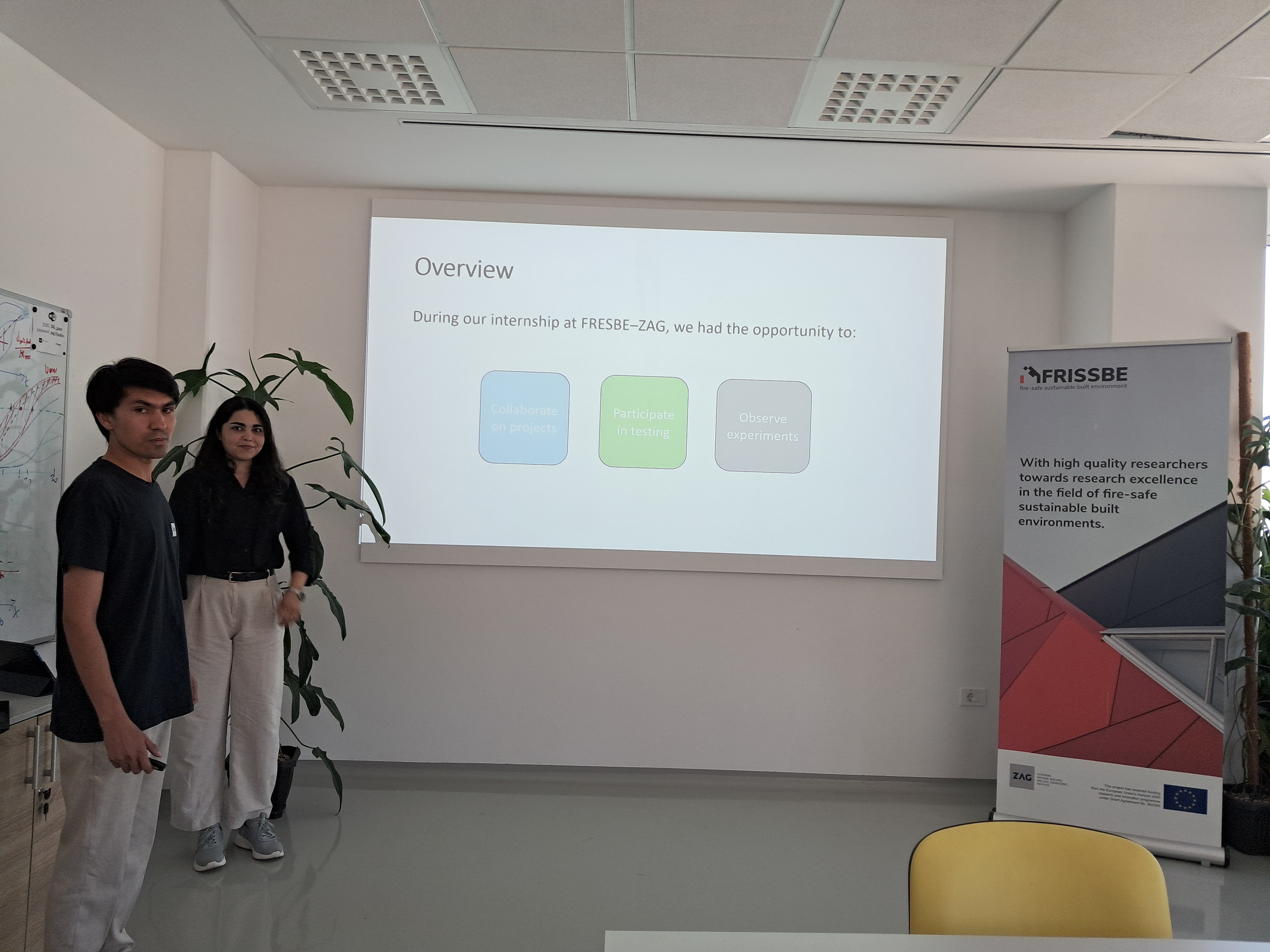
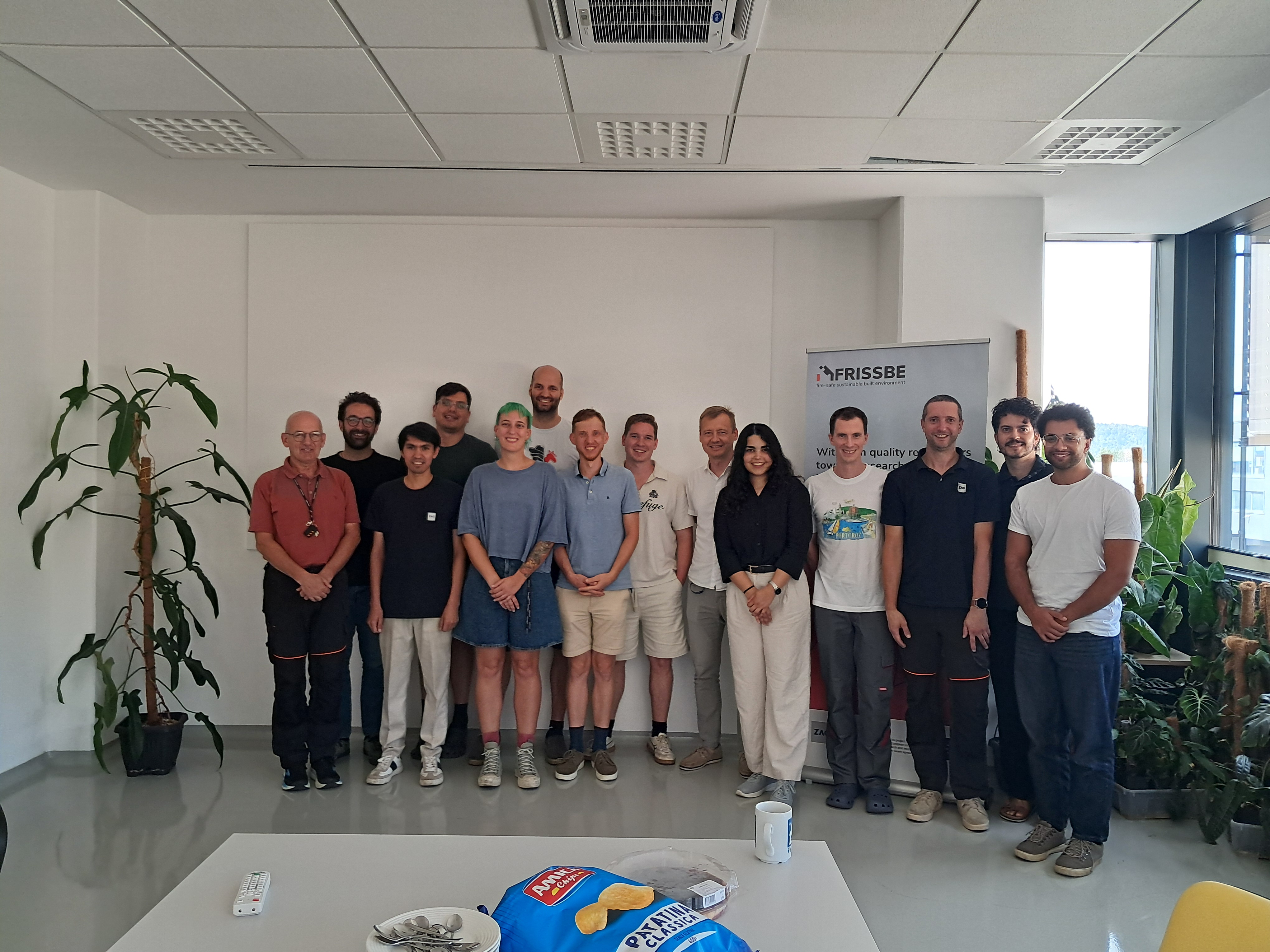
On 27th August, FRISSBE hosted the farewell presentation of Saba Sinaei and Ebrahim Frough, two master's students from the International Master of Fire Safety Engineering (IMFSE), who have spent the summer months at ZAG as part of their academic training. September marks their final day at the laboratory, closing a productive and varied internship that gave both students direct exposure to experimental fire research across multiple active projects.
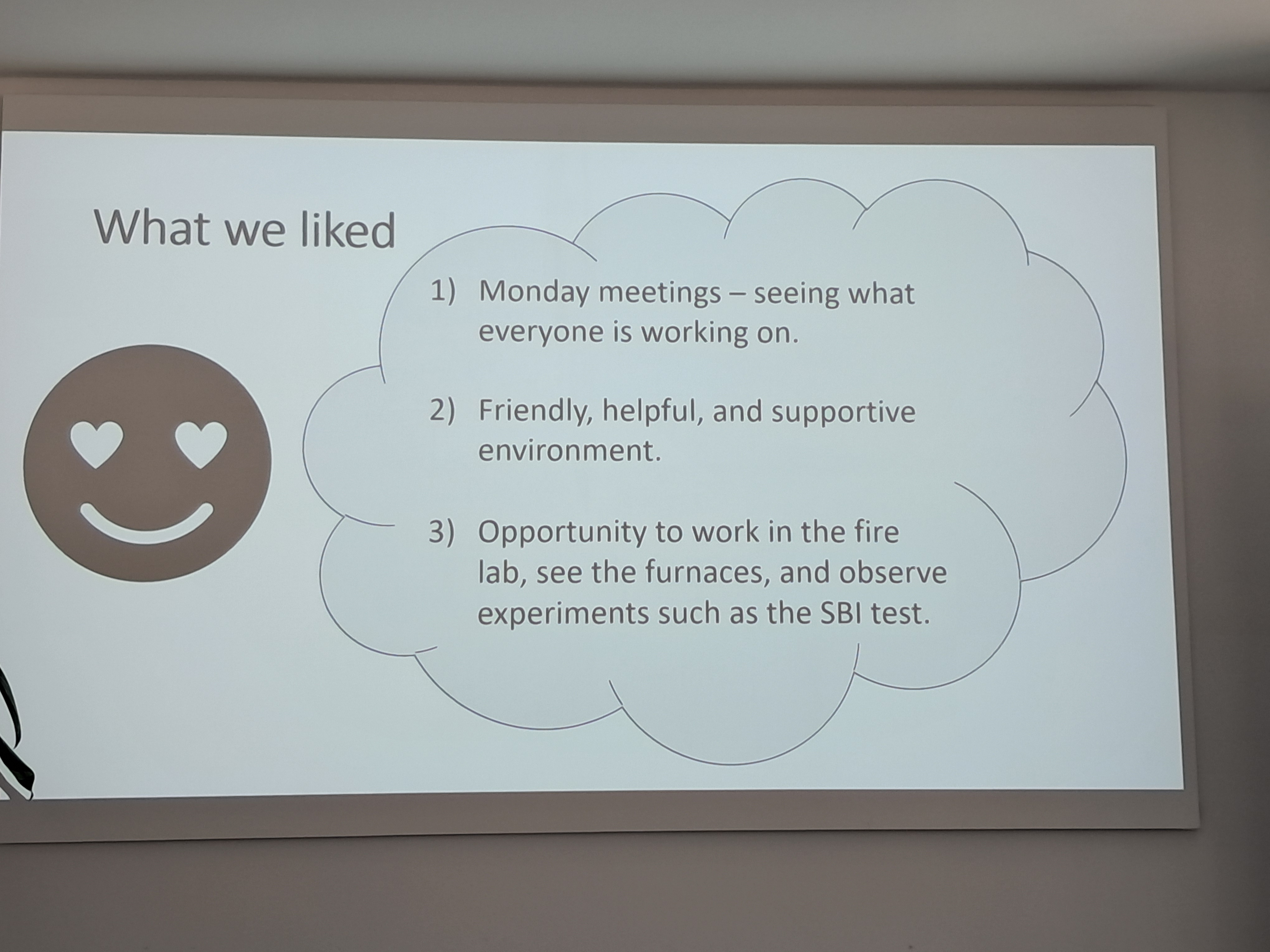
During their time at FRISSBE, Saba and Ebrahim collaborated on ongoing research projects, participated in fire tests, and observed experiments across several different research areas, gaining a first-hand understanding of what fire safety research looks like in practice.
TiRex: Large-Scale Timber Fire Testing
A significant part of their internship was devoted to the TiRex project, which involved large-scale fire testing of timber structural elements. Saba and Ebrahim contributed to post-fire data collection by marking cutting locations on tested elements, including three beams and sixteen columns, selecting positions in areas with wider crack gaps to capture the most relevant charring data. They then worked through a structured data analysis process, moving from raw thermocouple readings to comparable charring metrics: organising the data, tracking temperature responses, following the char front progression, and comparing performance across elements. The experience taught them that experimental design and instrumentation quality are inseparable from the reliability of the results, that turning temperature data into meaningful charring metrics requires careful methodology, and that automation is essential when working with large datasets. Cross-checking results at multiple stages, they learned, is what builds confidence in the final findings.
Battery Fire Testing: Venting and Thermal Runaway
Both students also had the opportunity to observe battery venting and thermal runaway experiments, including work with the Combustion and Smoke Behaviour Chamber (CSBC). They came away with a clearer understanding that venting and thermal runaway are distinct stages of battery fire behaviour, that thermal runaway can develop very rapidly once initiated, and that no single measurement method is sufficient to capture the full complexity of battery fire hazards. Complementary instrumentation and methods are essential, and setup quality directly controls data quality.
PV Roof Fire Testing
Saba and Ebrahim also participated in PV roof fire testing, which assessed the fire performance of rooftop PV assemblies using different roofing membranes, including PVC, TPO, and EPDM. They assisted with assembling and disassembling test specimens and observed the experiments, gaining a layer-by-layer understanding of how a PV roof assembly is constructed and the fire safety role of each component.
PV Fire Safety Micro-Credential
Both students also contributed to the preparation of the Autumn 2026 PV Fire Safety Micro-Credential course, helping to structure the syllabus, build a core literature base, and develop practical case studies. The task reinforced an important lesson: turning a broad and complex technical topic into a focused short course requires prioritising content carefully, combining standards with research, and using case studies to connect theory with real-world practice.
FRISSBE thanks Saba and Ebrahim for their contributions and enthusiasm throughout the summer. We wish them every success as they complete their IMFSE studies and take their first steps in the fire safety engineering profession.