News
FRISSBE Researchers Present at SiF 2026
From 18th to 21st May, Kingston, Ontario, hosted the 14th International Conference on Structures in Fire (SiF 2026), jointly organised by Queen's University and York University. The SiF conference series was established in the late 1990s to provide a global platform for researchers, engineers, and practitioners in structural fire engineering to present, exchange, and discuss the latest research findings and technical developments. Since its inaugural edition in Denmark in 2000, the conference has grown into one of the most prominent international forums in the field, with previous editions held across Europe, North America, Asia, and Australasia. This year's edition in Kingston marked the series' return to Canada for the first time since 2004.
FRISSBE contributed to the scientific programme through both a live presentation and three co-authored papers.
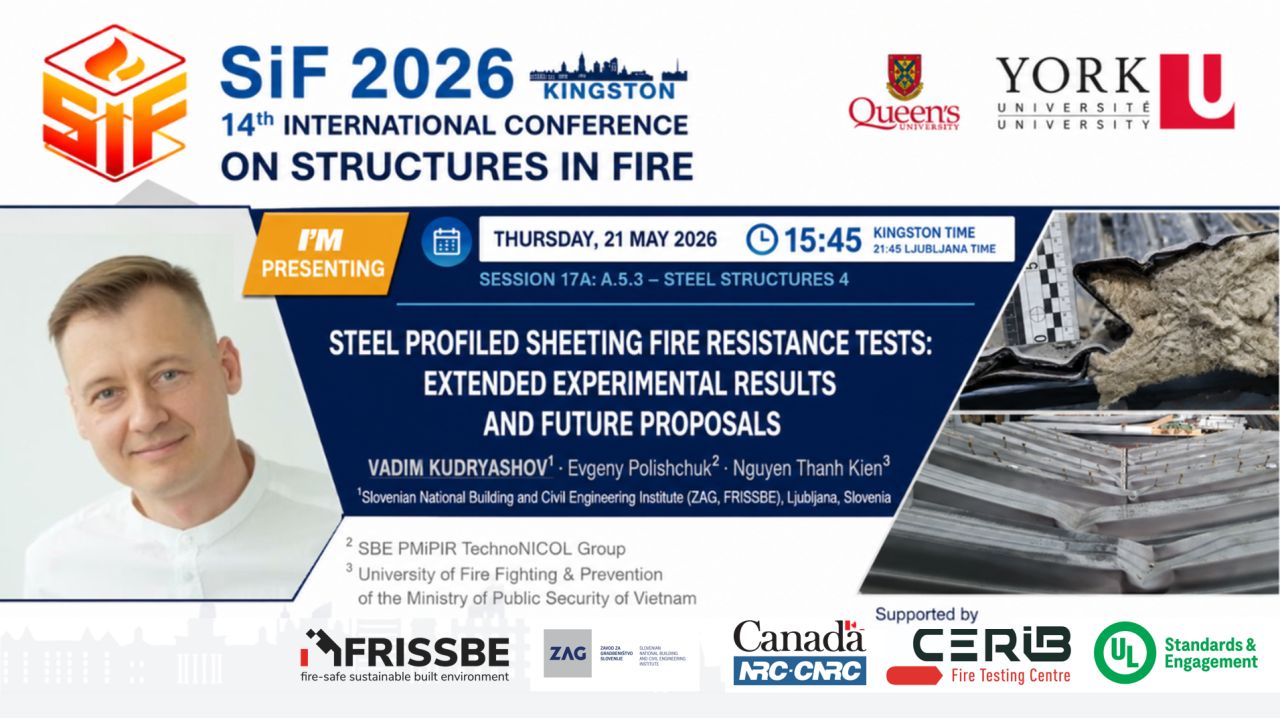
On the evening of 21st May, Dr Vadim Kudryashov presented online in Session 17A on Steel Structures, delivering a paper entitled "Steel Profiled Sheeting Fire Resistance Tests: Extended Experimental Results and Future Proposals". The presentation reported on full-scale furnace tests of trapezoidal steel profiled roof decking, with particular attention to large-deformation response and two distinct deformation regimes observed during testing. The work addresses an important nuance in structural fire engineering: the behavior of cold-formed thin-walled profiled steel systems in fire is characterized by the transition into either pure membrane or catenary-membrane deformation modes. This transition is driven by the interaction of buckling modes with restraint effects, along with temperature, making the response of such systems considerably more complex than that of conventional systems.
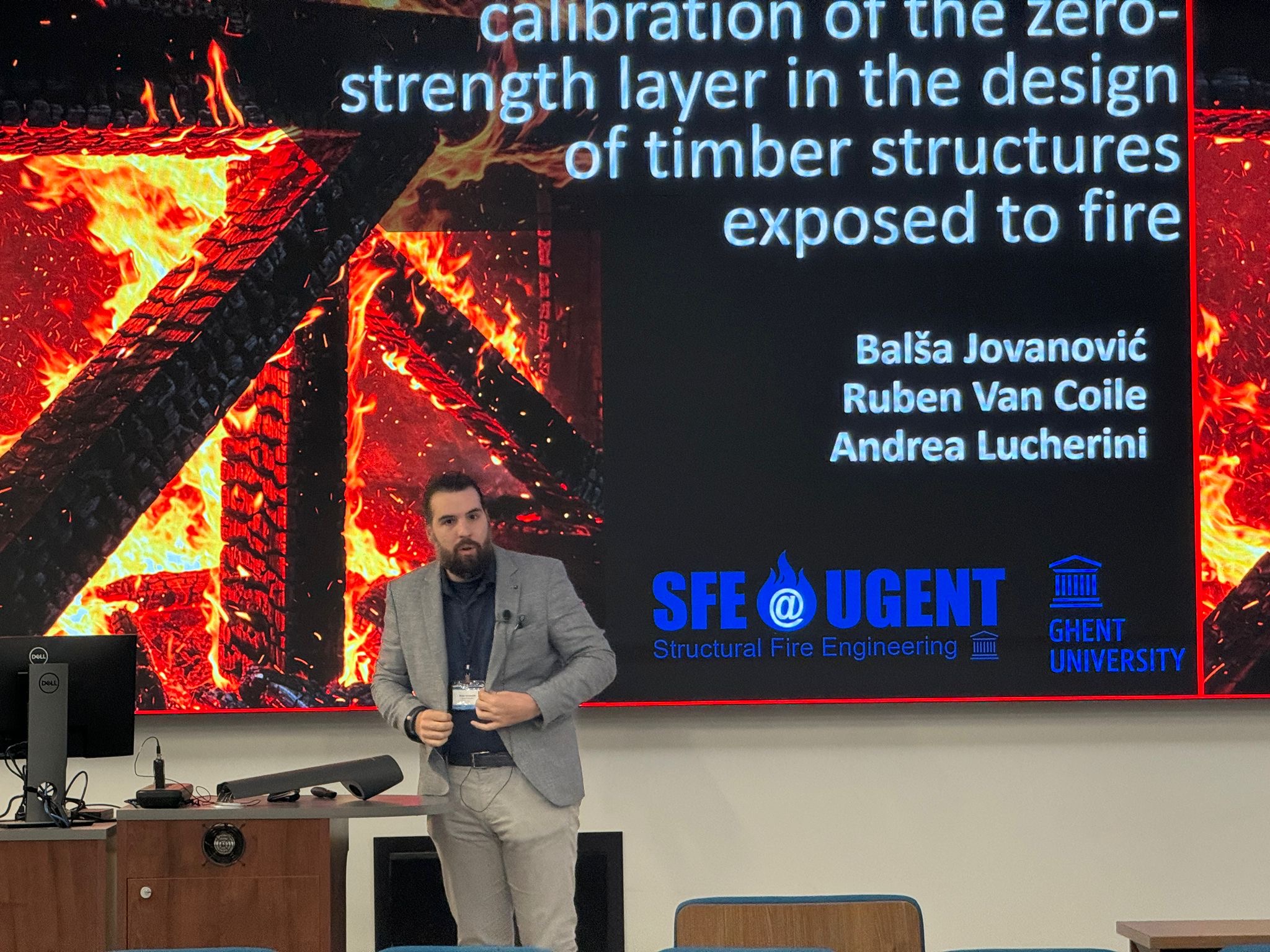
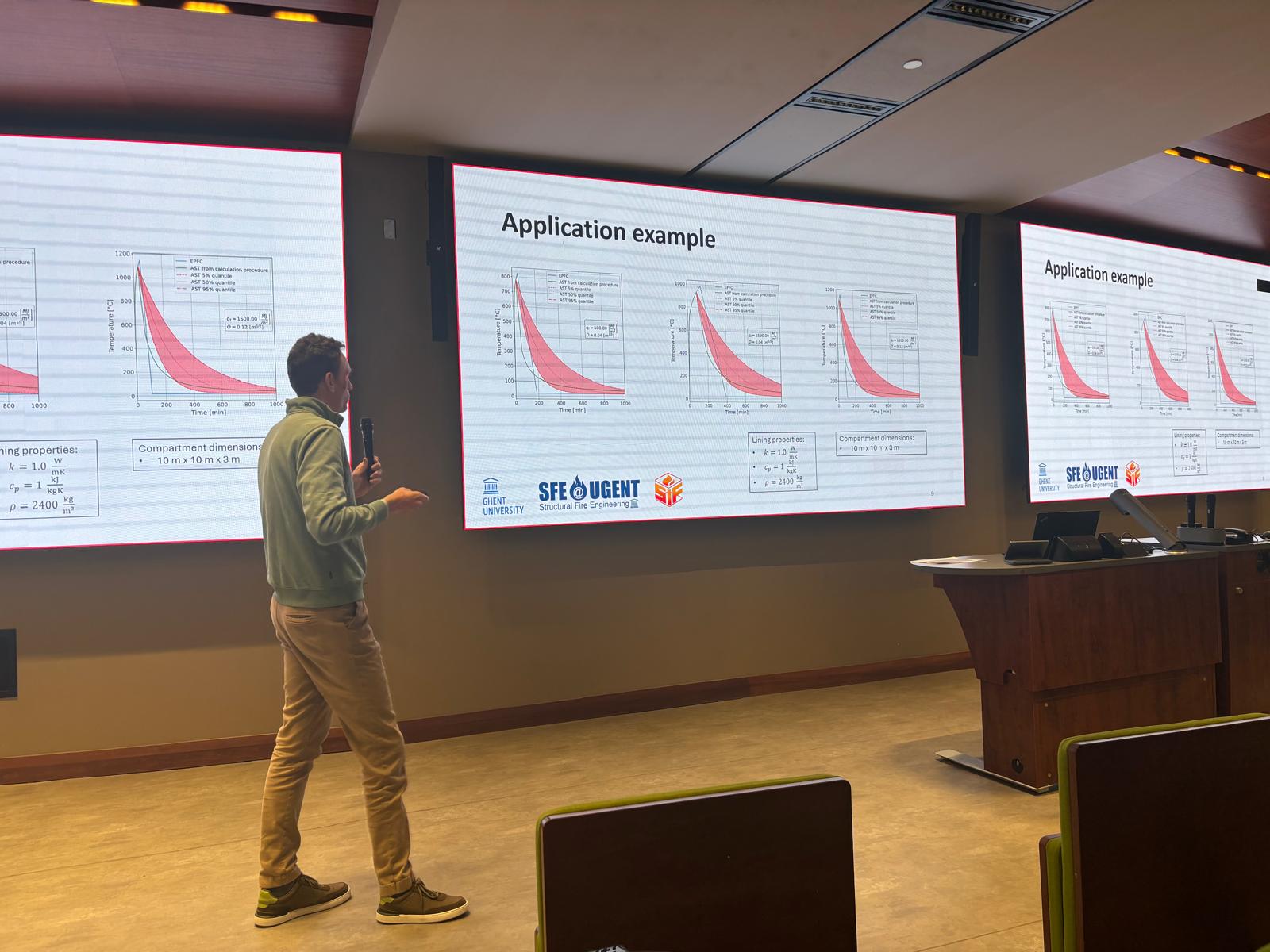
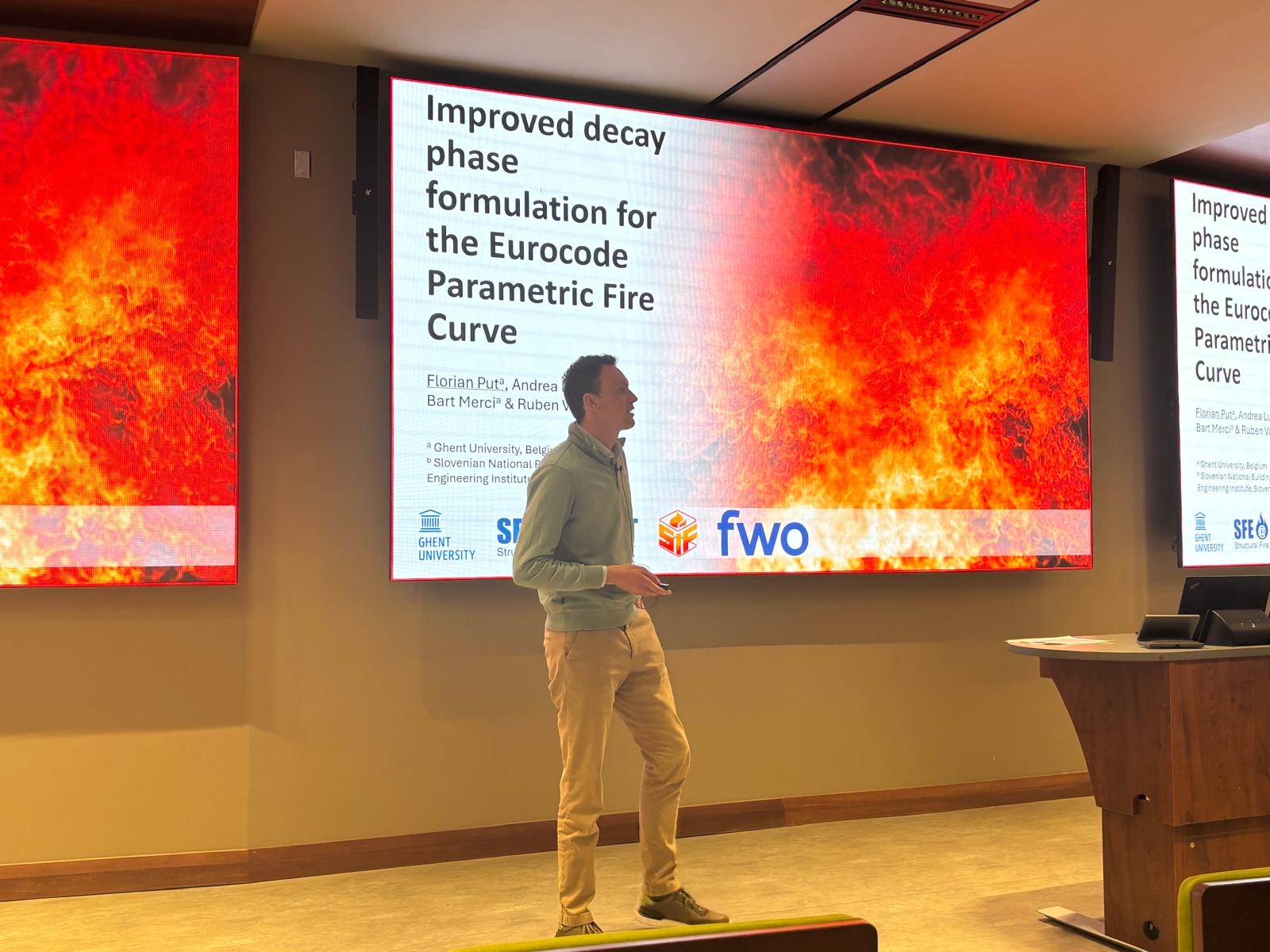
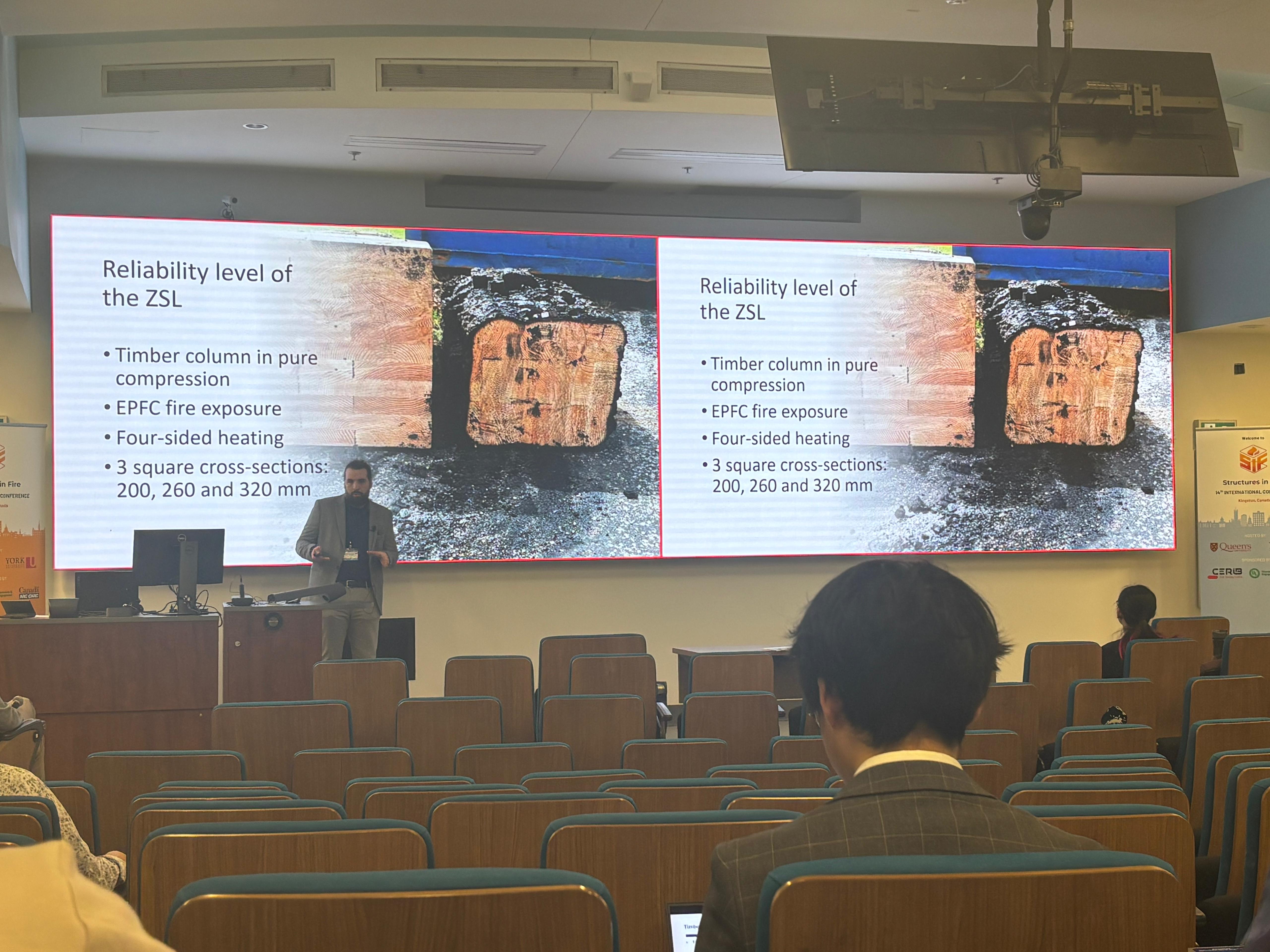
Dr Andrea Lucherini contributed as co-author to three further papers, all presented by the SFE at UGent team. Florian Put presented "Eurocode Parametric Fire Curves: Improved Formulation for the Fire Decay and Cooling Phases" addressing current limitations in how the decay and cooling phases are modelled under the Eurocode framework. Dr Balša Jovanović presented "Reliability-based assessment of the zero-strength layer in the design of timber structures exposed to fire" examining how probabilistic approaches can improve the treatment of charring and residual capacity in timber fire design. Dr Ramin Yarmohammadian presented "Assessing various techniques for the post-fire assessment of concrete structures", a study assessing various techniques for the post-fire evaluation of concrete structures.
Taken together, the four contributions span steel, timber, and concrete, reflecting the breadth of structural fire engineering expertise that FRISSBE brings to the international research community.