News
Lukas Larsen Presents His Master’s Research
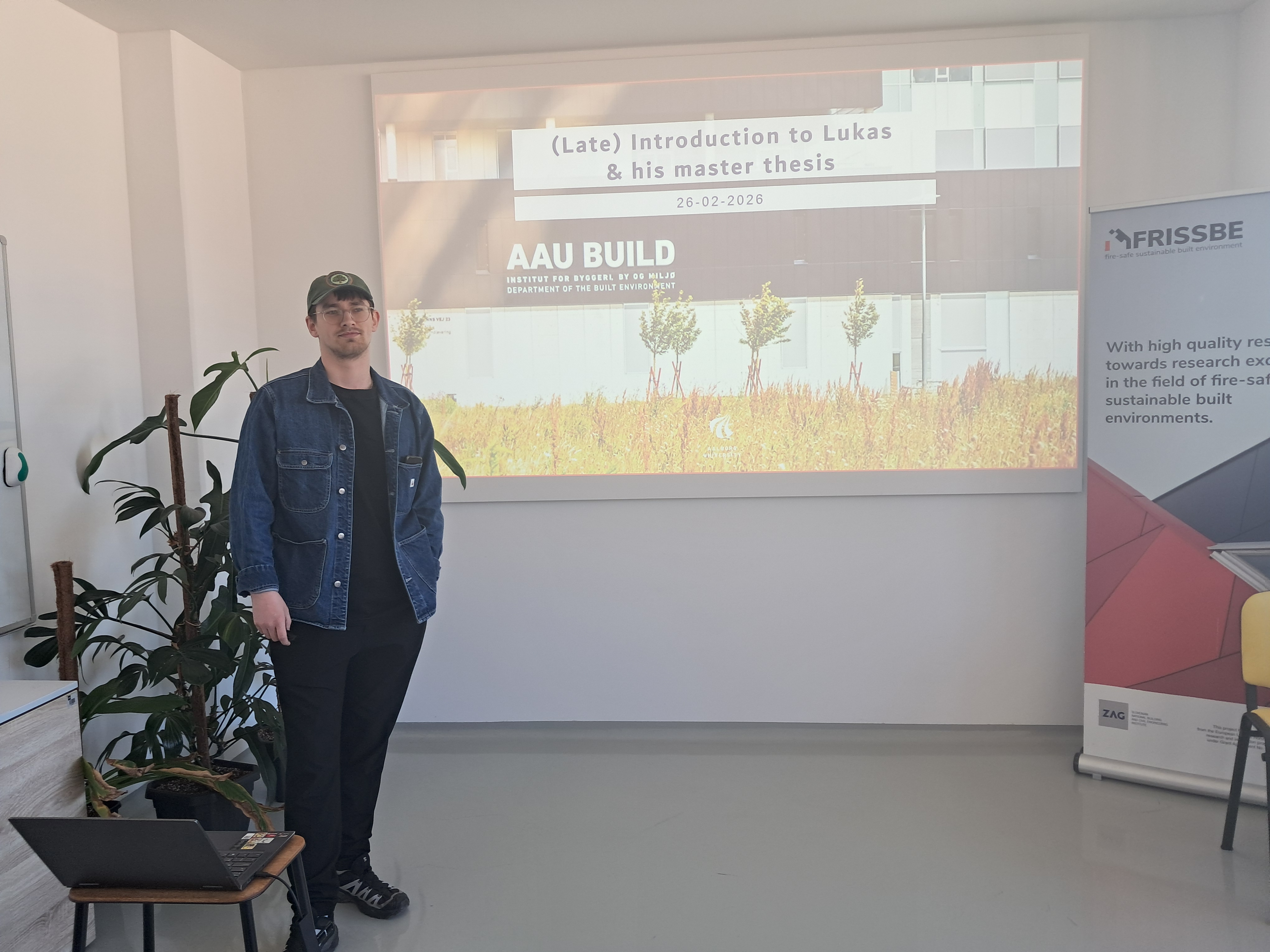
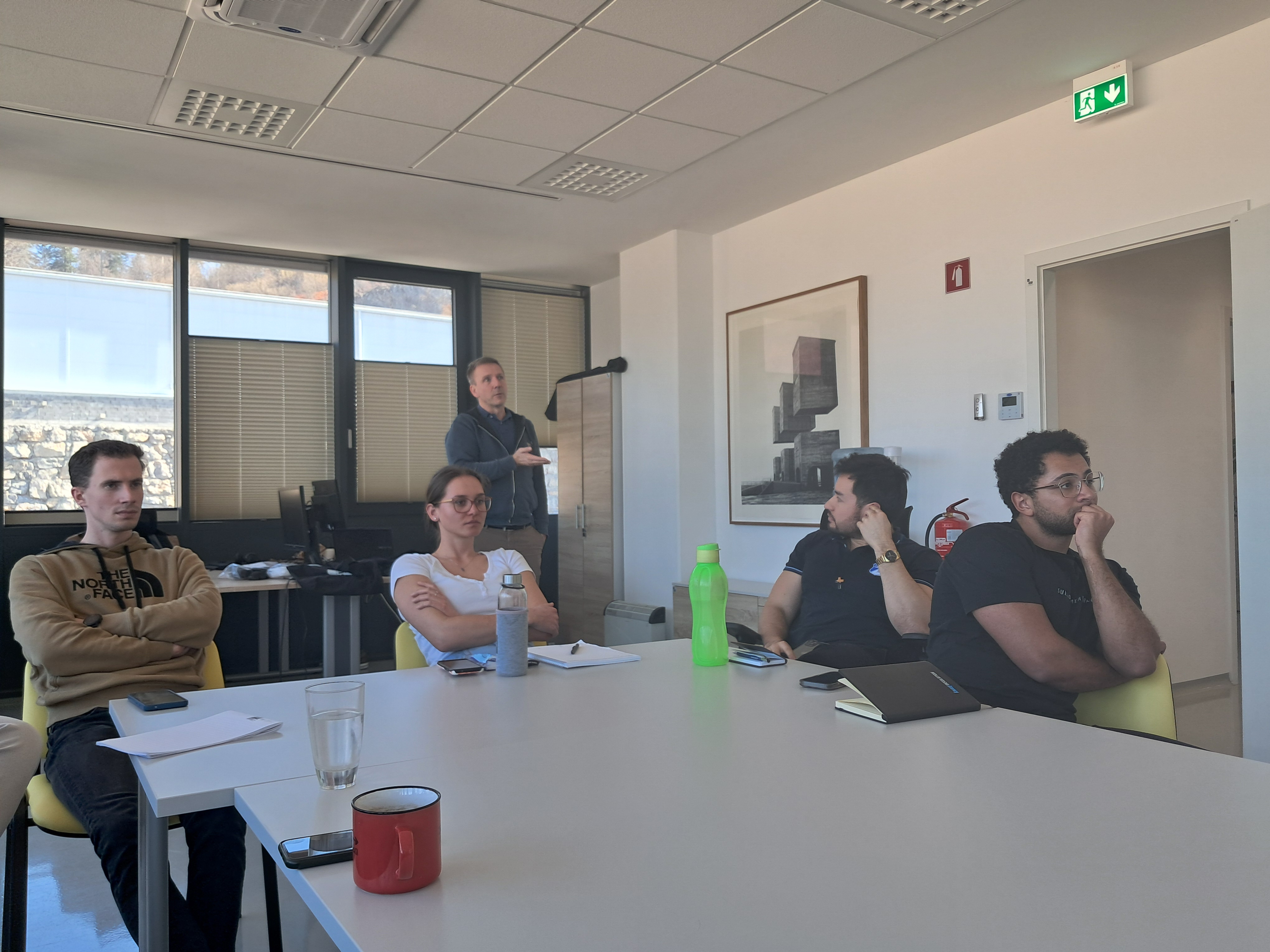
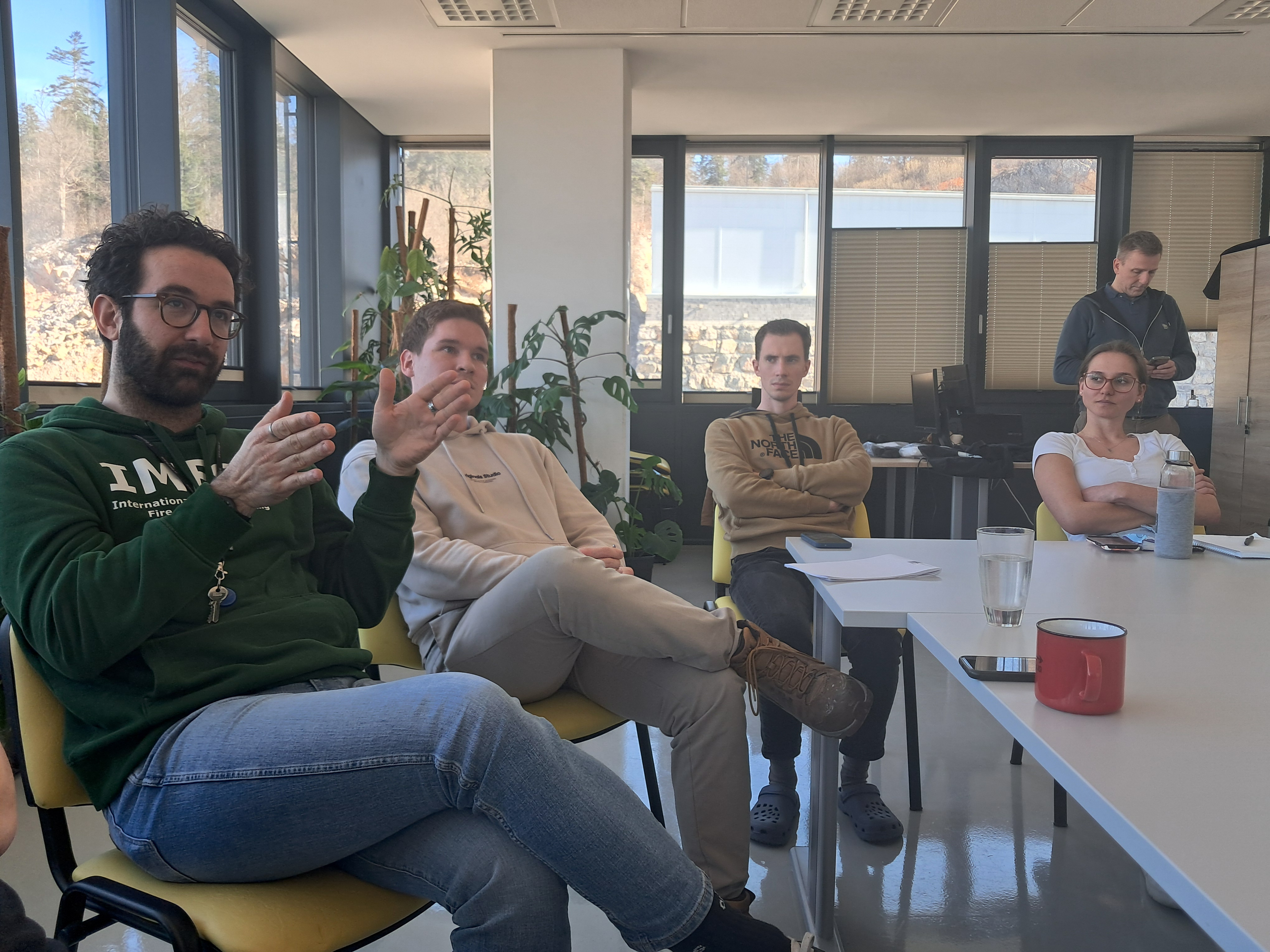
Lukas Højer Larsen delivered a seminar at the FRISSBE Fire Laboratory, presenting the progress of his Master’s thesis on natural smoke ventilation in large enclosures.
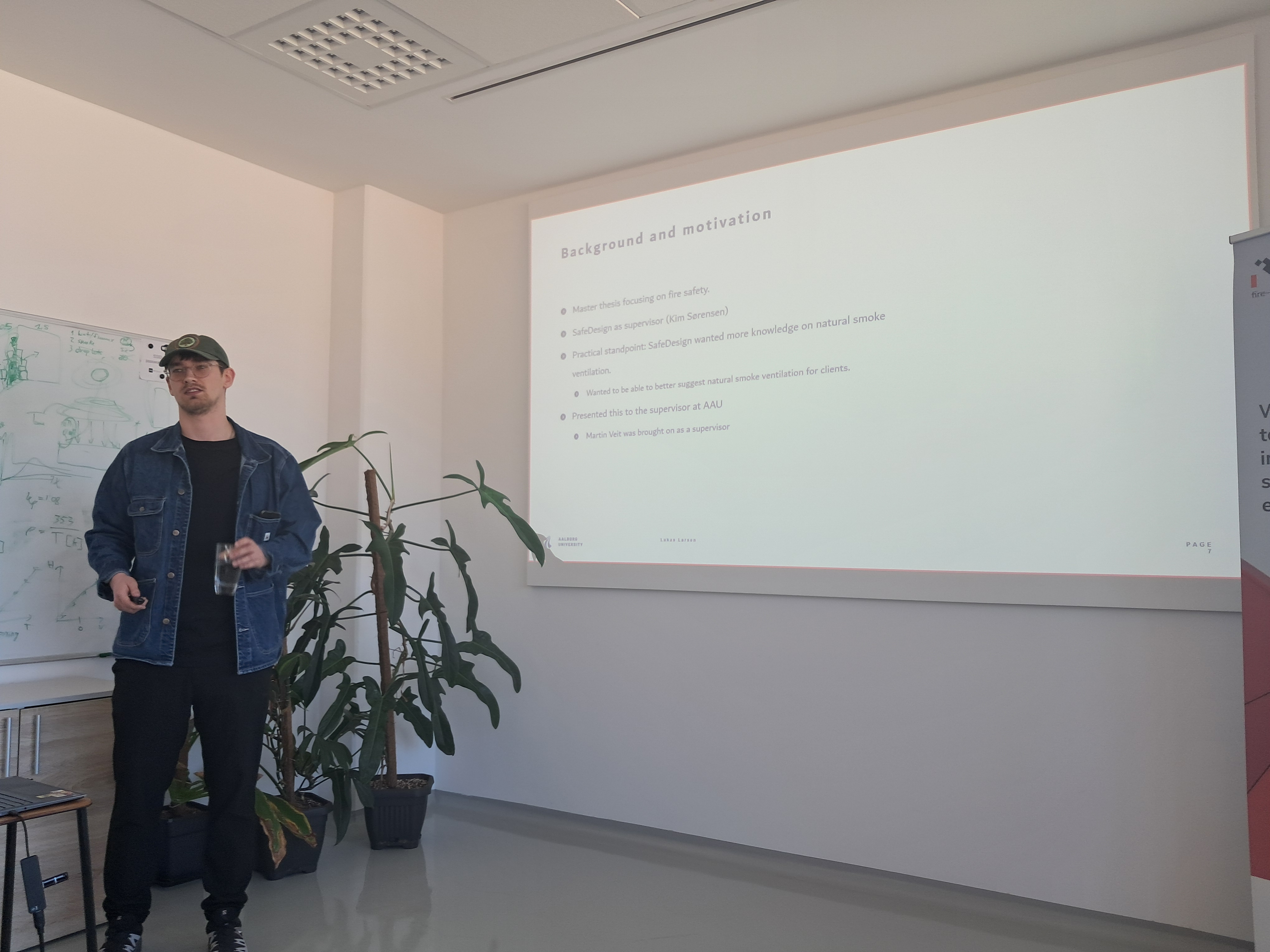
Lukas is a Danish MSc student in Indoor Environmental and Energy Engineering at Aalborg University. With a background in building physics and fire safety, and professional experience as a student assistant at SafeDesign (Fire Safety Consultancy) since April 2024, his work bridges academic research and practical engineering needs. His thesis is supervised by Kim Sørensen (SafeDesign), Aalborg University, and Martin Veit at FRISSBE.
From Practice to Research
The motivation behind the thesis emerged from consultancy practice. SafeDesign proposed the idea examining certain aspect of FDS modeling and to challenge requirements in the Danish Building Code. This evolved into a research question:
How reliable are current CFD modelling requirements for natural smoke ventilation design?
Under the Danish Building Code (BR18), CFD-based consultancy work must comply with specific mesh resolution criteria, including the requirement of at least nine computational cells along each dimension of an opening. Lukas’ work challenges this assumption by investigating how sensitive predicted mass flow rates are to mesh resolution, and whether correction factors can be introduced within a defined validity range.
Structure of the Thesis
The project consists of two main parts:
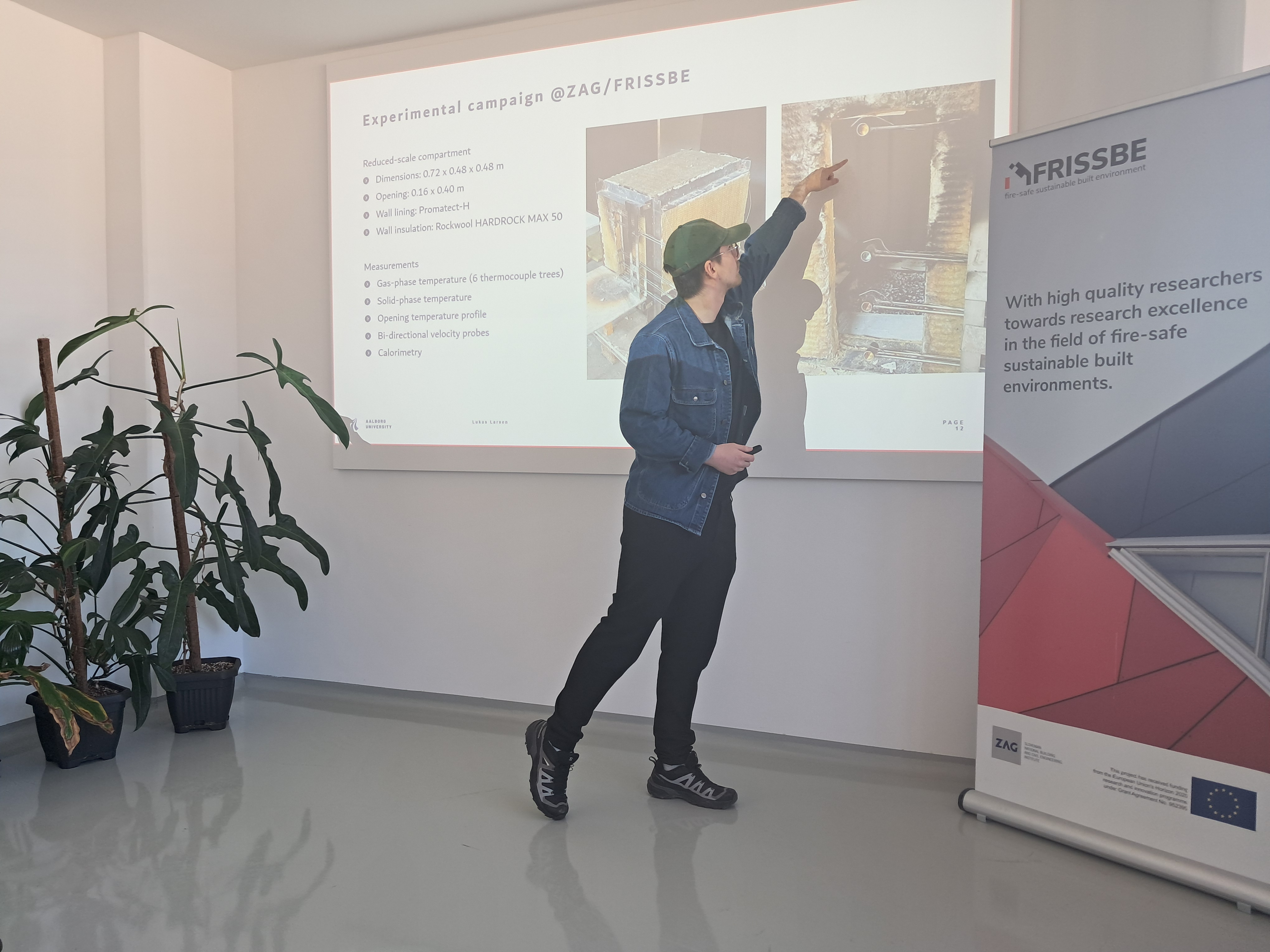
1. Experimental Campaign
- Reduced-scale compartment fire (0.72 × 0.48 × 0.48 m)
- Opening: 0.16 × 0.40 m
- Wall lining: Promatect-H
- Measurements: Gas-phase temperatures (6 thermocouple trees), Solid-phase temperatures, Opening temperature profile, Bi-directional velocity probes, Calorimetry.
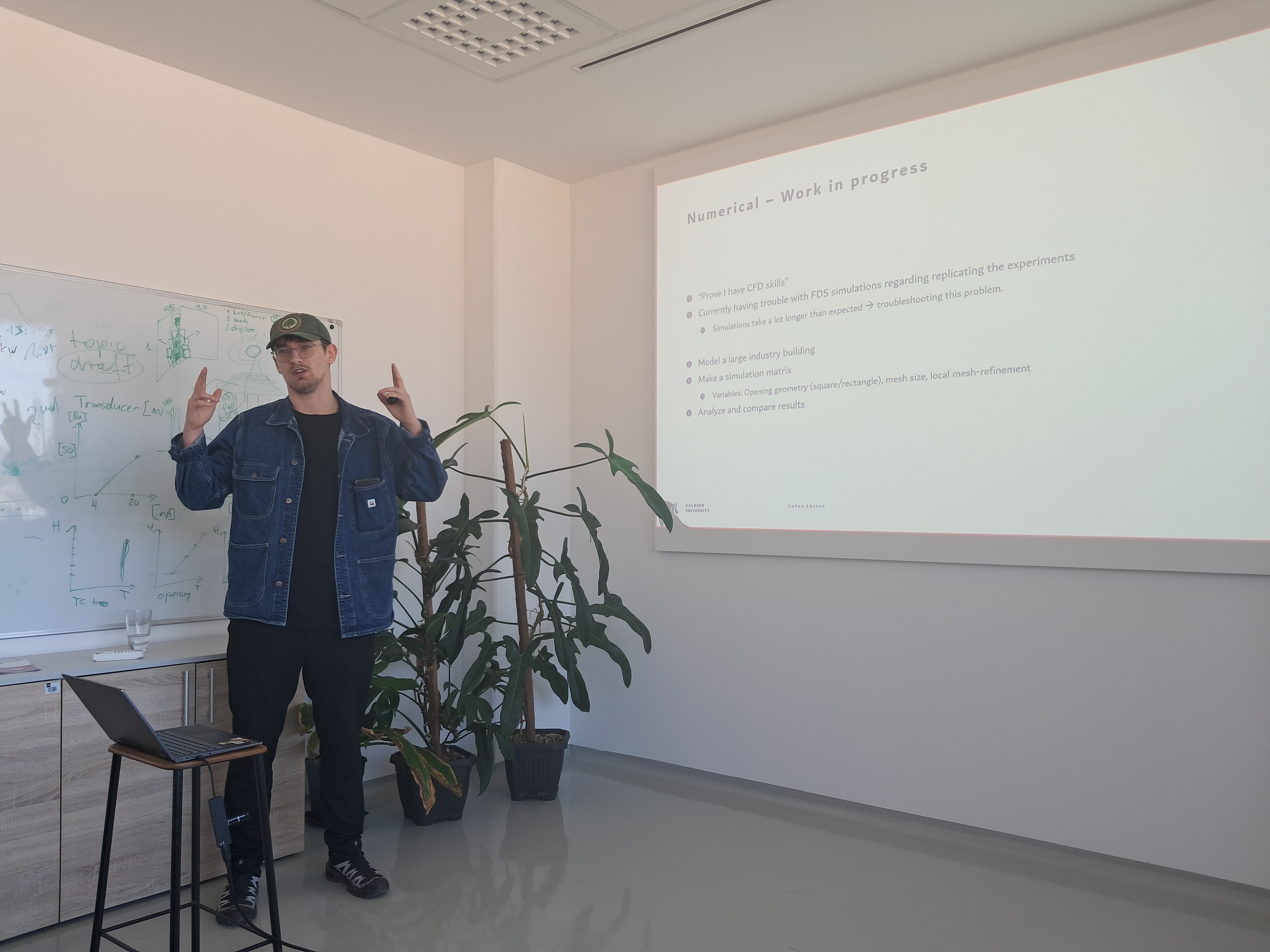
The purpose of the experimental work at ZAG/FRISSBE is to generate high-quality data for validation of CFD simulations. He also openly discussed ongoing challenges, including computational time and troubleshooting issues in reproducing experimental conditions numerically.
Linking Code, Simulation and Reality
The seminar highlighted the importance of validating numerical tools before relying on them in performance-based design. By combining controlled experiments with systematic numerical analysis, Lukas’ work contributes to improving confidence in CFD-based fire safety engineering, particularly in the field of natural smoke ventilation.
We thank Lukas for a clear and technically rigorous presentation and look forward to the next phase of his research.