News
Addressing Fire Risk: Key findings from FRISSBE study on PV installations.
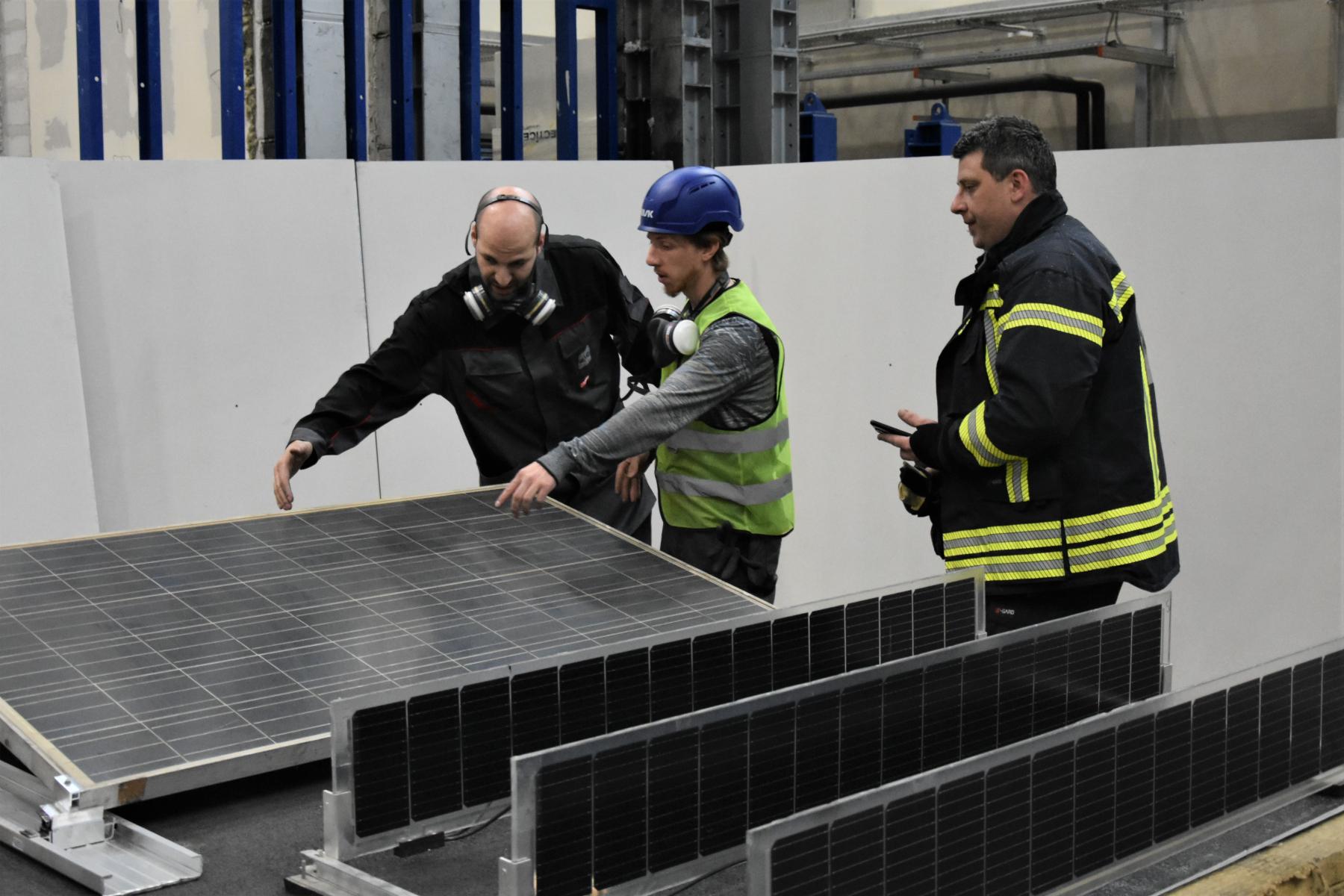
The transition away from carbon-based energy sources has heightened the adoption of solar energy, particularly through photovoltaic (PV) installations. However, recent incidents, like the fire at the Lidl distribution center in Peterborough, have raised concerns about fire risks associated with PV installations on flat roofs. To showcase some important aspects related to the fire safety of PV systems on roofs, experts from the Fire-Safe Sustainable Built Environment project (FRISSBE) conducted a demonstration to understand the fire dynamics and risks involved.
With a basis in the demonstration tests, Nik Rus, Kirils Simakovs, and Prof Grunde Jomaas published an article in the Fire & Risk Management (F&RM) journal by the Fire Protection Association (FPA), that provides valuable insights into the impact of PV systems on fire risks in buildings. The demonstration tests revealed two aspects that influence the fire safety of PV systems on roofs:
Configuration of PV Panels: The layout of PV panels significantly influences fire spread dynamics. Inclined installations may facilitate fire spread on the roofing membrane, emphasizing the need for careful consideration in panel configuration.
Importance of Mitigation Layer: In scenarios where existing roof insulation materials are less resilient to heat, a mitigation layer of non-combustible materials becomes essential. This layer acts as a barrier, preventing extensive damage and mitigating potential fire risks.
The success of this research initiative was made possible through collaborative efforts. Kirils Simakovs and Nik Rus from the FRISSBE team played crucial roles in planning, execution, and analysis, under the guidance of project leader Prof Grunde Jomaas. The work was carried out in excellent collaboration with the staff in ZAG’s fire laboratory in Logatec. In the video from the demonstration tests, you can see Simon Hrovat from ZAG’s fire laboratory extinguish the fire. Having trained firefighters as part of the staff is one of the many strengths of ZAG’s Fire laboratory.
This research provides crucial insights into mitigating fire risks associated with PV installations on flat roofs. By understanding the influence of PV configurations and the importance of mitigation layers, stakeholders can make informed decisions to enhance fire safety in buildings with PV installations.