News
Staff Exchange project eRISIKO
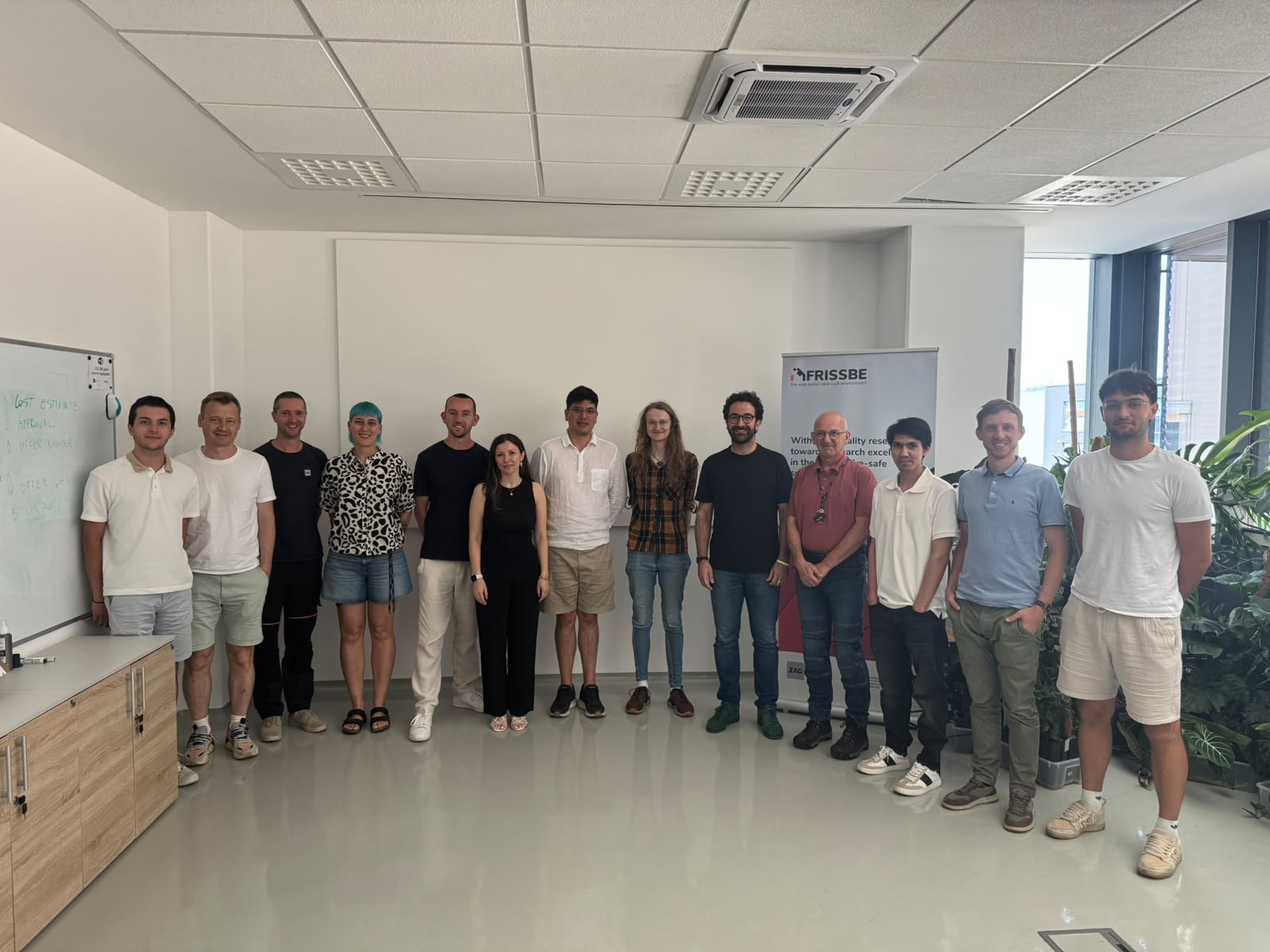
FRISSBE recently welcomed three researchers from the University of Liverpool as part of the MSCA Staff Exchange project eRISIKO (Grant Agreement no. 101236710), funded by the European Commission. The eRISIKO project brings together the Universidad de Navarra, the University of Liverpool, Universiti Putra Malaysia, ZAG FRISSBE, and Akademi Bomba Malaysia, with the support of Effectis. Its overarching aim is to enhance the fire safety of buildings in the context of the growing presence of electric vehicles, by developing a dynamic, AI-powered fire risk assessment tool for fire safety design and real-time assessment, supported by robust experimental data and integrated with energy management and regulatory studies.
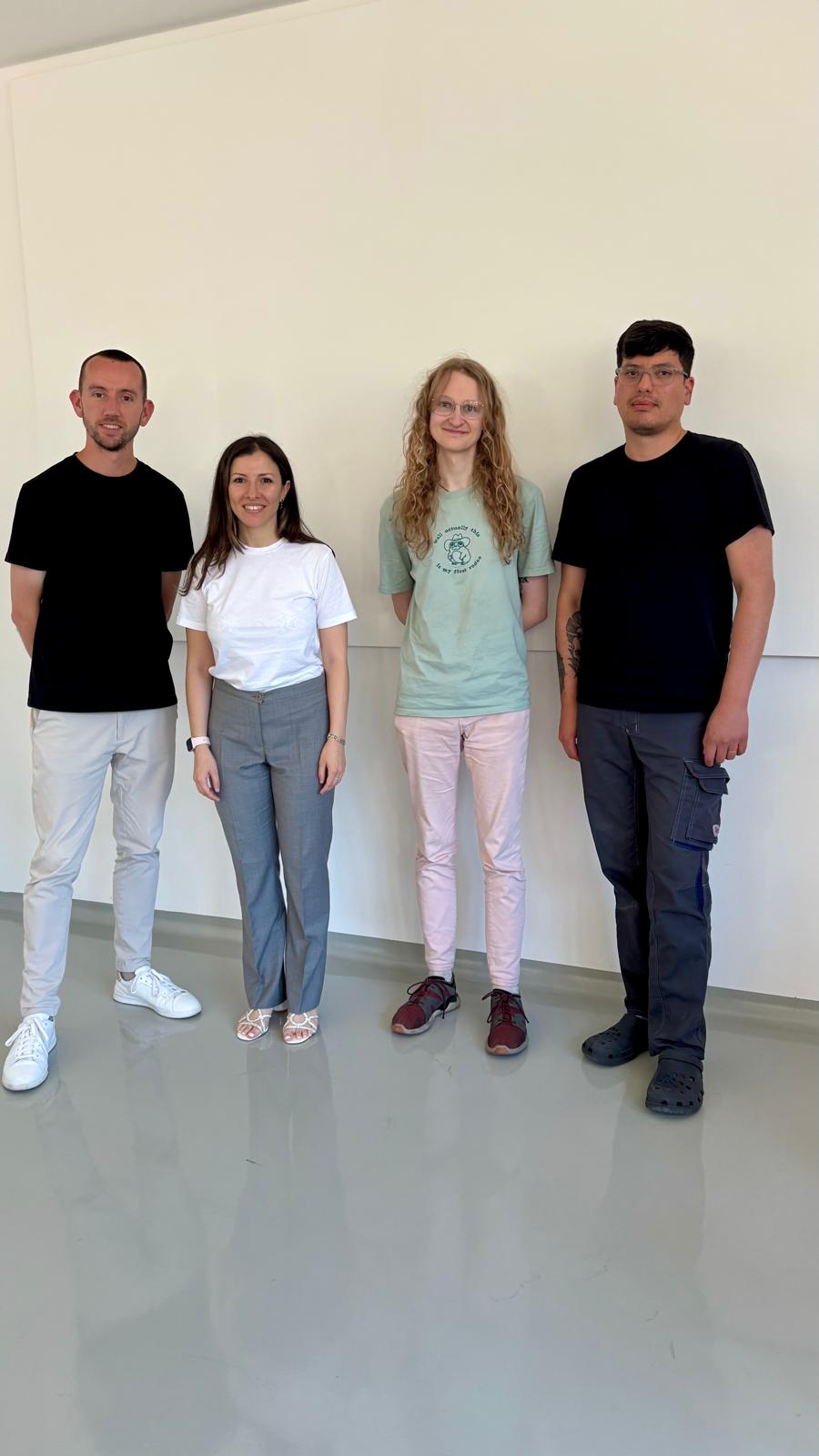
Dr Martina Manes is a Lecturer in Civil Engineering at the University of Liverpool whose research focuses on international fire statistics, fire risk assessment, and fire resilience. Her work has contributed to the update of British fire safety data and she has participated in the EU FireStat project funded by the European Commission. Dr Sam Povall is a Lecturer in Mathematics at the University of Liverpool, whose expertise in quantitative methods and statistical analysis brings an important interdisciplinary dimension to fire safety research. Jim Bridgeman is a doctoral researcher at the University of Liverpool, supervised by Dr Manes, Dr Xu Dai, and Dr Ulises Rojas-Alva at FRISSBE. Their PhD focuses on unravelling the data behind battery fires.
Jim Bridgeman's visit, lasting two months, was centred on experimental work at the ZAG Fire Laboratory in Logatec. Working alongside Dr Ulises Rojas-Alva, Jim carried out battery fire experiments using the Accelerating Rate Calorimeter (ARC) and the Cone Calorimeter, two key instruments in FRISSBE's fire testing infrastructure, generating experimental data for his doctoral research on lithium-ion battery fire behaviour.
Dr Manes and Dr Povall joined for a one-month exchange, during which they worked closely with Dr Rojas-Alva on a joint investigation into international electric vehicle fire incident datasets. The collaboration focused on understanding how fire incident data is collected across different countries, identifying the responsible authorities, assessing the statistical variables available, and evaluating the quality assurance processes that underpin the accuracy and reliability of these datasets. Both researchers also delivered invited presentations to the FRISSBE team: Dr Manes presented on the EU FireStat project, and Dr Povall on statistical analysis methodologies applied to fire data.
The most valuable aspect of the exchange was the development of genuinely interdisciplinary research, combining experimental fire testing, risk assessment methodology, and statistical analysis to address the complex and emerging challenges associated with the introduction of batteries into the built environment and their behaviour under fire conditions. The visit strengthened the collaborative ties between FRISSBE and the University of Liverpool and opened new avenues for joint work on battery fire safety research in the years ahead.