News
Elijah Igweh Presents at BIPV-Booster Workshop in Linz
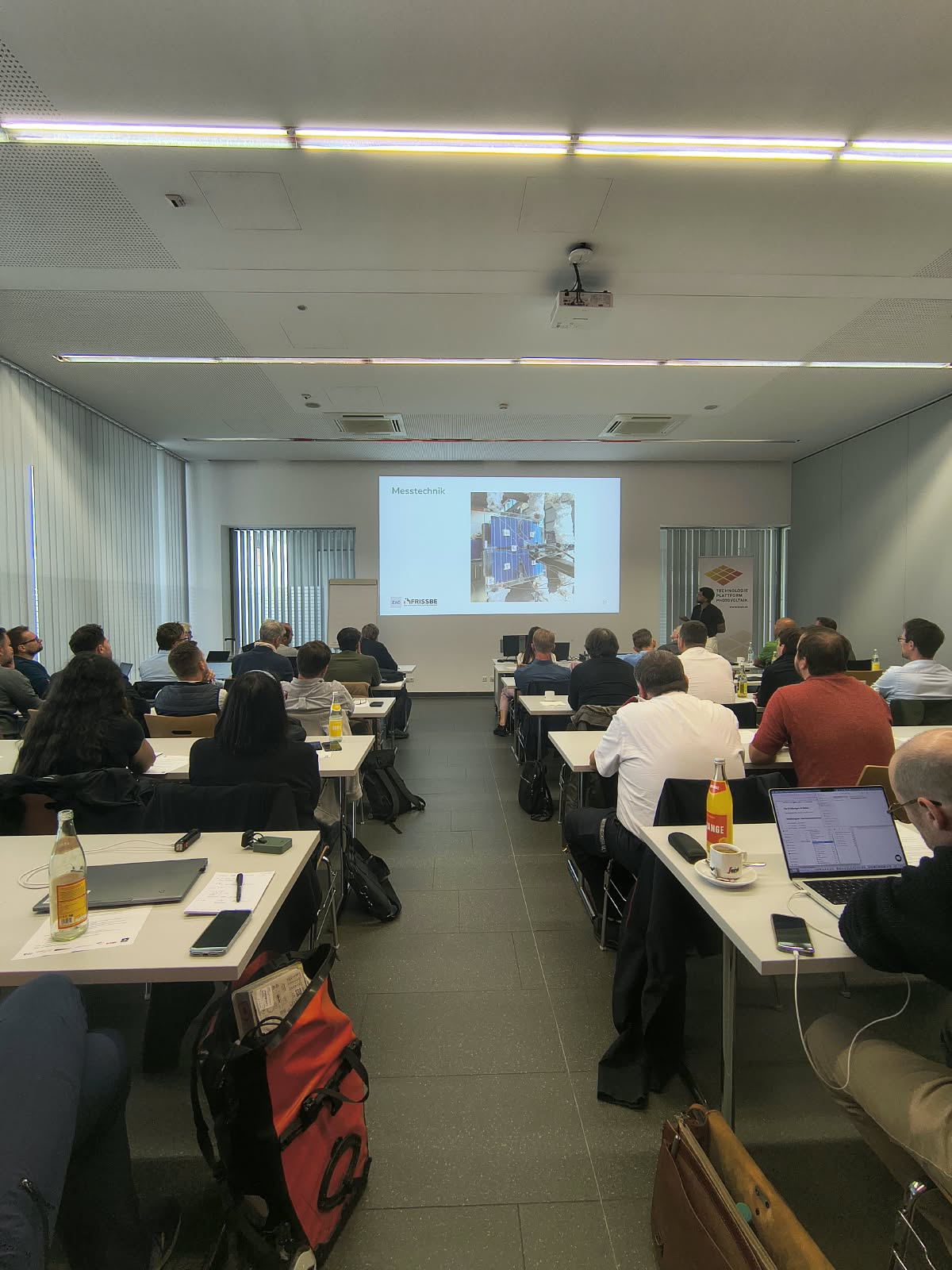
On 13th October, Elijah Igweh, PhD student researcher at FRISSBE-ZAG, travelled to Linz, Austria, to participate in the workshop “Photovoltaik an Fassaden: Ergebnisse aus Brandversuchen zu nachweisfreien Konstruktionen” (Photovoltaics on Façades: Fire Test Results for the Development of Proof-Free Constructions), organised by the Austrian Technology Platform for Photovoltaics (TPPV) at the Oö Landes-Feuerwehrverband in Linz.
The workshop was held as part of the BIPV-Booster project, a research initiative focused on developing fire safety verification frameworks for building-integrated photovoltaic (BIPV) systems on façades. The event brought together a diverse group of stakeholders including manufacturers of PV modules and mounting systems, materials producers, firefighters, officials from permitting authorities, and fire safety researchers, reflecting the broad range of sectors that need to work in concert to advance BIPV fire safety.
The programme covered current fire regulations for ventilated facades and BIPV systems, experiences from Switzerland, examples and potential applications of PV façades, fire test results and their implications for construction systems, potential improvements to PV module design, and proposals for updated fire safety guidelines. Presentations were delivered by representatives from IBS, OFI, Swiss Solar, and several Austrian engineering and construction organisations.
Elijah presented FRISSBE’s research on façade PV fire safety through the 3Fires project, sharing experimental findings on the fire behaviour and failure mechanisms of building-integrated photovoltaic systems. The presentation drew on laboratory fire testing carried out at ZAG and provided an overview of ongoing international research, highlighting complementary experimental approaches to understanding fire behaviour in building-integrated photovoltaics.
The visit also included a guided tour of the IBS (Institut für Brandschutztechnik und Sicherheitsforschung) fire testing facilities in Linz, offering a valuable opportunity to see the infrastructure of one of Austria’s leading fire safety research institutions, with which FRISSBE recently signed a Memorandum of Cooperation.