Team
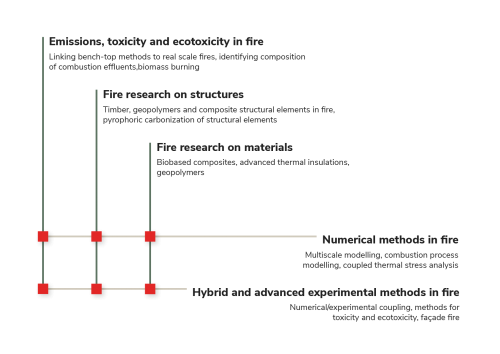
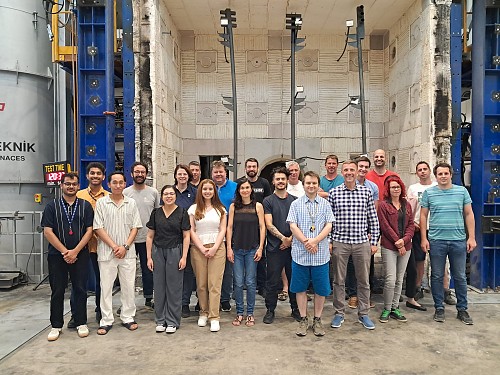
The FRISSBE Team and their Strategy for 2022-2026
%%SLIKA_3%%
Towards a fire-safe sustainable built environment
The FRISSBE team consists of competent and highly skilled researchers with extensive knowledge and experience in fire safety science and materials engineering. The team is led by the ERA Chair Holder, Grunde Jomaas, who is a world-leading fire scientist with more than twenty years of research experience. The team gathers unique researchers in the region and it aspires to be recognised worldwide for research excellence in the fire-safe sustainable built environment. We strive to make our research of the highest international standard and pledge that our communication with users and stakeholders will be transparent and comprehensible.
FRISSBE, as part of ZAG (Slovenian National Building and Civil Engineering Institute) and with InnoRenew CoE as a close collaborator, has access to state-of-the-art technology and research infrastructure and is actively involved in research projects, interdisciplinary collaboration with other research institutes and private partners, research dissemination, innovation, and knowledge-based services (consultancy).
Statement
We recognise the challenges in achieving a sustainable built environment, where many new construction materials, systems and technologies are being incorporated to reach the sustainability goals set out at various socio-political levels. These ambitious goals bring new fire hazards and risks that are essential to address for sustainability to be truly accomplished. Thus, we aim at tackling the emerging challenges to ensure future sustainable and fire-safe built environments that contribute to local, regional and global sustainability goals.
Mission
Our mission is to use our state-of-the-art laboratory facilities for research that increases the understanding of the fire behaviour of construction materials and systems. This high-quality research – carried out at various scales – enables a fire-safe sustainable built environment. We investigate the fire behaviour of timber, biobased materials and engineered wood products, modern and innovative energy solutions, and other sustainable construction products that emerge because of the constant development in the built environment. Our research strengthens the educational programmes at the University of Primorska, and it is also used to provide safety recommendations for industry and to educate professionals through workshops and customized courses.
Vision
Our vision is to be a global center for fire research related to the development of a built environment that is both fire-safe and sustainable. We will achieve this through an interdisciplinary approach that considers all relevant aspects in a holistic evaluation of the full life-cycle contributions of fires in the built environment. Through dissemination of our findings, we want to improve the competence of professionals and the quality of educational programmes. Finally, the outcomes of our research will ensure that sustainability calculations are not optimized without considering the contributions from fire, all while making sure the built environment remains resilient and provides safety for its users.
Here you can also download a copy of the FRISSBE Strategy 2022-2026: Towards a fire-safe sustainable built environment.
.
OVERVIEW OF THE RESEARCH TOPICS
.png)
For expanded info about the ongoing activities please visit Research Activities.
RESEARCH AREAS AS DEFINED IN THE PROJECT SUBMISSION
%%INFOGRAPHIC_1%%
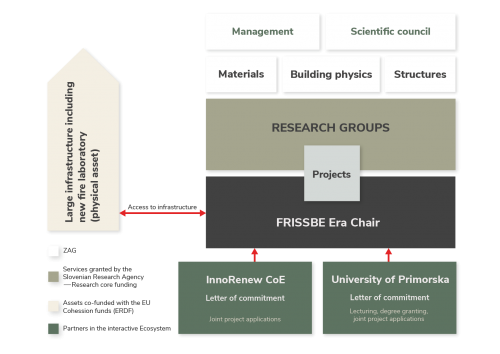
The FRISSBE project and the newly ZAG established department with the same name strive to create and support a strong R&D centre focused on fire research in Southern and Central Europe. In FRISSBE, the key to success in terms of performance and impact lies in an integrated approach, covering R&D on methods, materials and structures, graduate and postgraduate training, complementary research on, e.g., bio-based materials and recycled materials as well as solid industrial research.
This is achieved through a broader interactive ecosystem, consisting of the FRISSBE ERA Chair as well as other units of the host institution and two strongly affiliated institutions: the InnoRenew CoE, established under the H2020 WIDESPREAD-2-Teaming: GA No. 739574, providing excellence in complementary bio-based materials research, and the University of Primorska (UP), complementing the ecosystem with wider multidisciplinary research, bachelor's, master's and doctoral degree-granting function, and stronger interaction with peers. Both institutions firmly expressed their willingness to cooperate with the FRISSBE ERA Chair in the project proposal phase, and at the moment the cooperation is successfully ongoing and is presented by mutual applications for competitive funds, research visits and other joint activities.
ZAG was established in 1949 when the People's Republic of Slovenia founded the Building and Civil Engineering Institute. In 1952, it was renamed to Institute for Testing and Research in Materials and Structures (ZRMK). After Slovenia became independent, new conditions in 1994 led to the division of ZRMK into public and private parts. The laboratories and most of the research activities were transferred to the public research institute, ZAG. One of the fundamental objectives of ZAG was to continue the tradition of the research and professional work of the ZRMK, which served since its very establishment as one of the leading civil and building engineering institutes in then Yugoslavia. After more than a quarter-century of independent operation, ZAG is successfully navigating the outlined path. We have gained recognition both at home and even more so abroad. We are an equal and active member of numerous important international associations dealing with the broader area of construction. According to the relevant indicators, we are entirely comparable to the best similar European institutes.
The InnoRenew CoE has been successful in hiring researchers and support staff from abroad (57 employees in 2019, nearly 50% from abroad, including from outside of Europe). It is supporting the beneficiary and the ERA Chair holder by transferring its practices to establish strong recruitment and retention policy that will make ZAG and FRISSBE an attractive workplace, with a culture of engagement and employee participation in the sustainability of the Institute.
Universitiy of Primorska has made the ERA Chair holder a full professor and he will contribute to the university through a part-time research and teaching position at the Faculty of Mathematics, Natural Sciences, and Information Technologies (FAMNIT), where he will organise and deliver courses in the Sustainable Built Environments MSc program and supervise students in the Renewable Materials and Healthy Built Environments PhD study programme. The beneficiary (ZAG), in turn, provides internships and research infrastructure for students from these programs to gain practical research experience and conduct their studies.
%%INFOGRAPHIC_1%%
EXTENDED ECOSYSTEM
International Master of Science in Fire Safety Engineering (IMFSE). The FRISSBE team sees great benefits from the prestigious associated partner status of ZAG in the IMFSE. The IMFSE programme is a world-class MSc in fire safety engineering, and as an associated partner, we offer summer internships and host master thesis students in the program. So far, we have had the pleasure of working with 10 IMFSE summer interns, and in the Spring semester of 2025, we will host the first thesis student. Furthermore, we have benefitted from participating in the FSE day in Lund in 2024 and the Celebration Day (graduation/commencement) in June 2024. We are already booked for the FSE Day in Barcelona in April 2025 and the Celebration Day in June 2025. Furthermore, we also enjoy collaboration through the network of IMFSE partners, associated partners and IMFSE contributors. Finally, we constantly engage with the ever growing community of IMFSE alumni
%%SLIKA_2%%
4 FULL PARTNER UNIVERSITIES
- GHENT UNIVERSITY, BELGIUM
- LUND UNIVERSITY, SWEDEN
- THE UNIVERSITY OF EDINBURGH, UNITED KINGDOM
- POLYTECHNIC UNIVERSITY, SPAIN
%%SLIKA_3%%
7 ASSOCIATED PARTNERS
- UNIVERSITY OF QUEENSLAND, AUSTRALIA
- ETH ZURICH, SWITERLAND
- UNIVERSITY OF MARYLAND. USA
- UNIVERSITY OF SCIENCE AND TECHNOLOGY OF CHINA
- UNIVERSITY OF POITIERS, FRANCE
- WORCESTER POLYTECHNIC INSTITUTE, USA
- ZAG - FRISSBE, SLOVENIA
%%GALLERY-%%SLIKA_4%% %%SLIKA_5%%
RELATED NEWS
SFPE IMFSE Student Chapter Webinar: PV Panels and Fire Safety: Challenges and Solutions
Successful Graduation of IMFSE Students in Ghent
SFPE IMFSE Student Chapter Webinar: Timber Structures and Fire Safety
9th IMFSE Fire Safety Engineering Day
Lecture to the IMFSE and Fire Safety Eng. Programme at University of Ghent
General objective
The main objective of the FRISSBE project is to establish an ERA Chair for fire-safe sustainable built environments at the Slovenian National Building and Civil Engineering Institute, ZAG, where cutting-edge research infrastructure for fire testing is being established. Combining of the new research infrastructure and the ERA Chair will create the appropriate conditions for high-quality outstanding researchers and research managers to move and engage with the beneficiary, aiming to achieve excellence in the scientific field of fire-safe sustainable built environments and modify their research and innovation landscape. An outstanding researcher, the ERA Chair holder, will have a decisive and positive impact on the culture and performance of ZAG as a whole.
The FRISSBE project will implement new practices at ZAG by attracting and maintaining high-quality personnel under the direction of the ERA Chair holder. The project will lead to lasting, sustainable structural changes to achieve excellence at ZAG and spread excellence in the region. Changes will be tested in a new autonomous unit, the FRISSBE ERA Chair, and will be transferable to ZAG as a whole.
The concept will be tested on a few levels: testing the research enhancement process, building capacity in applying for competitive funds, and building sustainable relationships with the industry. FRISSBE will have regional impacts in terms of research, education, and engineering. Added-value of the project is amplifying the capacities of the Fire laboratory co-financed with ERDF funds, ensuring conditions to foster excellent research.
Specific objectives
Obj. 1. To kick off the ERA Chair and attract an outstanding researcher that is internationally recognised in the field, has an excellent teaching and mentorship track record, outstanding performance in competitive funding applications, and demonstrated management skills in the field of fire research for the ERA Chair position.
Obj. 2. To enhance existing support offices at ZAG by a long-term engagement of Intellectual Property Rights (IPR), Technology transfer (TT), Human Resources Management (HRM), and Legal Experts to fully support a bilingual working environment and establish a stimulating research environment.
Obj. 3. To adequately populate the ERA Chair holder's research team (3 senior researchers, 3 PhD and 6 postdoctoral students).
Obj. 4. To define and execute the capacity building programme: improved scientific excellence with submission of scientific articles, an increased success rate of project proposals submitted by ZAG as a coordinator, gained funds allocated to the ERA Chair that originate from other sources than the FRISSBE project.
Obj. 5. To ensure that ERA Chair and the ERA Chair holder will be able to host and supervise PhD students from a number of universities in the region and wider.
Obj. 6. To ensure the high international commitment of the ERA Chair with different universities where the ERA Chair holder or ERA Chair co-workers will hold invited lectures on specific fire-related topics in frames of graduate and postgraduate study of fire engineering
Obj. 7. To strengthen the role of ZAG as an excellent research centre in the local and regional environment with the involvement of national and international industrial partners in submitting research project proposals and in organising international conferences and workshops.
Obj. 8. To sustain and maintain ERA Chair good practices and establish lasting cooperation between the ERA Chair and stakeholders as well as the ERA Chair and peers.
Obj. 9. To exploit and disseminate the FRISSBE project's results.
Obj. 10. To ensure efficient administrative, financial, and contractual management of the ERA Chair Widespread Project and to manage resources, strengthen the research management and administration skills of the institution, track project's progress, and assess and mitigate risks.
Obj. 11. To fulfil ethics and gender equality goals within the project with respect to relevant fields, e.g., humans, protection of personal data and the environment, in all activities, by developing a gender equality plan for the ERA Chair unit and ZAG as a whole.
Workplan
%%SLIKA_1%%
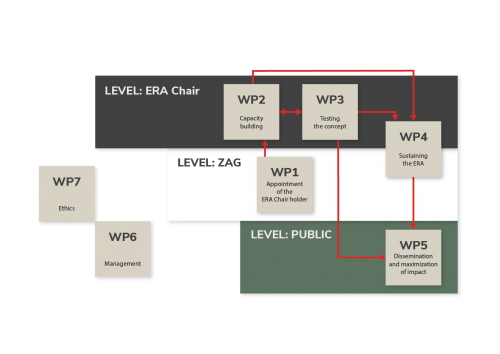
The FRISSBE work plan consists of 7 work packages. The work flows through these packages in an orderly and measurable way designed to reduce risk and increase efficiency.
WP 1 (Appointment of the ERA Chair team and support staff) is the fundamental WP and comprises all necessary activities to establish the ERA Chair, including the selection of the ERA Chair holder, their team and support staff. In this WP, particular care shall be given to establishing a bilingual environment at the beginning of the project for seamless communication between the ERA Chair staff (including the ERA Chair holder), the rest of ZAG, and the FRISSBE interactive ecosystem. WP 1 addresses project objective Obj 1.
WP 2 (Capacity building) and WP 3 (Plan development and testing the concept) reach inwards towards the core ZAG from the FRISSBE ERA Chair. The principle employed is PDCA (Plan-Do-Check-Act). WP 2 is the core WP – it is dedicated to capacity building (Plan-Do), particularly implementing the excellence component of the structural change. WP 3 complements WP 2 by testing and adjusting the activities (Check-Act) in WP 2 in the operational research, administrative, and grant writing environment. In WP 3 the concept will be tested, and the effectiveness of ERA Chair internal measures will be measured. This implementation supports an iterative approach that will ensure an optimal solution is found. WP 2 addresses project objectives Obj 2 and Obj 3 and WP 3 addresses Obj 4, Obj 5.
WP 4 (Sustaining ERA Chair) extends beyond the timeframe of the project. It is dedicated to sustaining the FRISSBE ERA Chair long after the project will end. In that respect it is essential for the long term strategy of ZAG. The impact of WP 4 is focused on supporting and sustaining change at ZAG beyond the project lifetime. WP 4 also creates a loop back to WP 2 and WP 3, but only beyond the project timeframe. WP 4 addresses project objective Obj 6, Obj 7 and Obj 8.
WP 5 (Dissemination and maximizing of impact) reaches out to different stakeholders through the deployment of the research and related processes in practice and through the dissemination of the project results. WP 5 will have an impact beyond the beneficiary, for example, an impact on the research process in similar institutions and industries as well as knowledge transfer to industry and better cooperation with different stakeholders. WP 5 addresses project objective Obj 9.
WP 6 (Management) deals with the management of the FRISSBE project, including all necessary coordination activities of the ERA Chair, the rest of ZAG, and the EC. WP 6 addresses project objective Obj 10.
WP 7 (Ethics requirements) deals with ethics requirements addressing human subjects, protection of personal data, and the environment. WP 7 addresses project objective Obj 11.
Here is the list of all the deliverables already submitted in the course of the FRISSBE project. The publicly accessible ones are available through links:
Deliverable D1.1 - ZAG Act on the establishment of the ERA Chair Unit
Deliverable D1.2 - Appointment of the ERA Chair holder
Deliverable D1.3 - JOBS AND HIRING COMMITTEES DESCRIPTIONS AND JOB POSTING PLAN
Deliverable D1.4 - Selection committee report v.01
Deliverable D2.1 - Focused SWOT, state of play analysis
Deliverable D2.2 - Personal and team capacity building programme
Deliverable D5.1 - Statement on ZAG’s peer reviewed publications published 3 years prior to the FRISSBE ERA Chair
Deliverable D5.2 - FRISSBE Project website
Deliverable D5.2 - FRISSBE Project website
Deliverable D5.4 - Detailed Dissemination and Communication Plan
Deliverable D6.1 - Management structure and project management manual
Deliverable D6.2 - Data Management Plan
Deliverable D6.3 - Annual management report - 1rst year
Deliverable D7.1 - Requirement No. 1
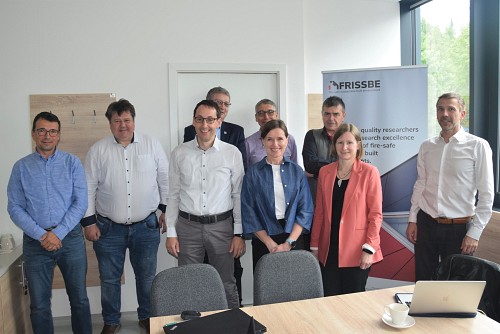
The Advisory Board (AB) for the FRISSBE project meets twice a year, of which one is striving to be in-person for all its members. The meetings are intended to present the members with the progress made in the preceding period and to propose potential improvements.
The members of the AB are:
Andraž Legat
FRISSBE Project Coordinator, ZAG
Urška Kropf
FRISSBE Project Manager, ZAG
Aleš Žnidarič
Director of ZAG
Tanja Vertelj
Head of Science Division in Science Directorate, Ministry of Higher Education, Science and Innovation
Aleksander Špec
Ministry of Defense – Administration for Civil Protection and Disaster Relief
Nina Kristine Reitan
CEO of RISE Fire Research AS
José Torero
Professor & Head of UCL Department of Civil, Environmental & Geomatic Engineering at University College London (UK)
Klemen Klemenak
Senior Timber Enigineer at Stora Enso
Andreja Kutnar
Director of InnoRenew CoE and Professor at FAMNIT at University of Primorska (representing UPR in the Advisory Board)
Mike Burnard
Deputy Director of InnoRenew CoE
Darija Aleksić
FRISSBE external consultant for ethics in research and associate professor at School of Economics and Business at University of Ljubljana
Grunde Jomaas
Head of The Department for Research of Fire-safe Sustainable Built Environment – FRISSBE at ZAG and Professor at FAMNIT at University of Primorska
(alongside to the ERA Chair holder and the Project Coordinator)
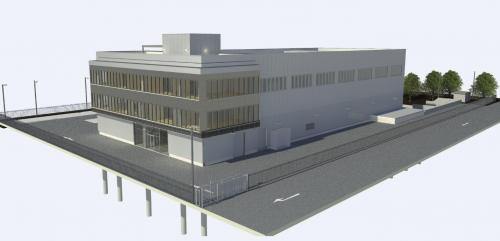
NEW BUILDING, STATE-OF-THE-ART EQUIPMENT, YEARS OF EXPERIENCE…
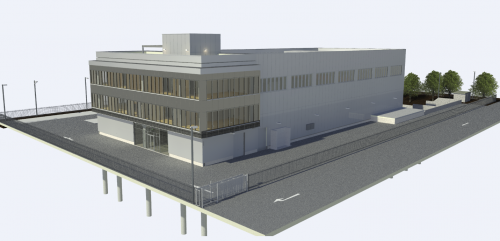
The Slovenian National Building and Civil Engineering Institute (ZAG) has been dealing with fire engineering and testing for more than 40 years. Over time, the expansion of work areas and work itself lead to a strategic decision: the existing laboratory in Gameljne near Ljubljana needed to be replaced with a new laboratory, which would also strengthen the scientific and research excellence of the staff.
The newly established Fire laboratory is now located in Logatec and it offers state-of-the-art fire research with high-fidelity measurements. The new building is home to ZAG’s new Department for Fire-Safe Sustainable Built Environment (FRISSBE) that consists of two units:
%%SLIKA_1%%
The FRISSBE team is a part of a larger group at ZAG’s Fire laboratory and thus works closely with The Fire Laboratory and Fire Engineering Unit which consists of the following employees:
- Friderik Knez
- dr. Nataša Knez (ORCID)
- dr. Urša Blumauer (LinkedIn, Google Scholar, ORCID)
- doc. dr. Sabina Jordan (LinkedIn, Google Scholar, ORCID)
- dr. Matija Uršič (LinkedIn, Google Scholar, ORCID)
- Petra Jelenc (LinkedIn, Google Scholar, ORCID)
- Nika Stopar (LinkedIn, Google Scholar, ORCID)
- Simon Grum (LinkedIn, Google Scholar, ORCID)
- Dominik Gerdej (LinkedIn, Google Scholar, ORCID)
- Aleksander Bergant (LinkedIn, Google Scholar, ORCID)
- Robert Umek (LinkedIn, Google Scholar, ORCID)
- Anuša Babuder (LinkedIn, Google Scholar, ORCID)
- Denis Velić (LinkedIn, Google Scholar, ORCID)
- Simon Hrovat (LinkedIn, Google Scholar, ORCID)
- Milenko Benčina (LinkedIn, Google Scholar, ORCID)
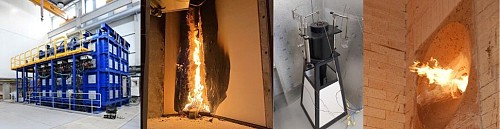
The Fire laboratory is equipped with facilities for standard testing for building and maritime industry, which is, together with some other special equipment, also used for research purposes. In general, testing is focused on pre flashover fire conditions considering reaction to fire properties of different building materials and fully developed fire conditions at fire resistance tests. The laboratory boasts a unique façade research set-up which allows fire testing of different large scale mock-ups with real time heat and smoke measurements along with FTIR analyses of exhaust gases of up to 10 MW of released heat. Furthermore, the laboratory offers bespoke small, intermediate and large scale experimental designs with oxygen calorimetry and FTIR measurements.
%%SLIKA_1%%
1. Fire resistance testing for classification according to EN 13501-2, -3, -4
Loadbearing and non-loadbearing elements, fire resisting ducts and dampers, components of smoke control systems
2. External fire exposure to roofs for classification according to EN 13501-5
CEN/TS 1187
3. Reaction to fire testing for classification according to EN 13501-1
EN 13823 (exposure to the thermal attack by a single burning item)
EN ISO 1716 (determination of the heat of combustion)
EN ISO 1182 (Non combustibility test)
EN ISO 11925-2 (Small flame test)
EN ISO 9239-1 (Fire tests for floorings)
4. Testing of insulation products
EN 16733 (Determination of propensity to undergo continuous smoldering)
5. Maritime testing (2010 FTP Code)
Testing according to Part 1, Part 2, Part 3, Part 8, Part 9, Part 11
6. Research equipment
ISO 5660-1 (Cone calorimeter method)
ISO 5660-5 (Cone calorimeter method under reduced oxygen atmospheres)
Modified ISO 5660-5 method
7. Fire safety studies
8. ETA / STS development, certification support
FRISSBE research areas have a wide span as can be seen in the graphics. Impact on the Sustainable Development Goals proposed by the United Nations was also recognized for each area of research.
.png)
.png)
.png)
.png)
.png)
Internal research projects
Internal research projects involve researchers from the FRISSBE Department in collaboration with other ZAG Units. Below you will find the list of our internal projects carried out since 2022. If you have questions about a project, please feel free to contact its coordinator.
2026
Characterisation of jet flames, energy release, and off-gassing of Lithium-ion batteries (LIB-JETS), Coordinator: Juan Felipe Sánchez Gutiérrez, IMFSE Thesis student supervised by Ulises Rojas-Alva)
Towards understanding the reaction-to-fire performance of modern construction products by comparing the single burning item (SBI) and the room corner tests (CornerFire). Coordinator: Andrea Lucherini
Fire risks related to the installation of photovoltaic systems on existing buildings and proposals for systemic preventive measures (SONELEKT). Coordinator: Nik Rus
Assessment of fire risks associated with lithium-ion batteries in the mobility sector and in buildings (EMOBILNOST). Coordinator: Aleš Jug
Electric Vehicle Fire Risk Assessment in Buildings (eRISIKO): Coordinator: Ulises Rojas-Alva
FS-rebuilt & EU Fire Stats II. Coordinator: Grunde Jomaas
2025
Screening and Assessment of Fire Effluent in Textiles (SAFE-Tex), Coordinator: Matija Uršič
Hemp-reinforced lime-gypsum renders with green carbonate-based flame retardants, (EcoFLAME), Coordinator: Zala Žarkovič
Research on BIPV photovoltaic facades for fire spread mechanisms and structural failures (3FiRES), Coordinator: Andrea Lucherini
ZAG’s Digital Fabrication Hub (DFHub 2), Coordinator: Lucija Hanžič
2024
Virtual Hybrid Fire Testing & Full-Scale Testing Data Gap (HYBRID & GAP), Coordinator: Nika Stopar
Environmental Impact of Fires in the Built Environment (FIEERCE), Coordinator: Ulises Rojas-Alva
Preliminary investigation on the effect of Lithium-ion battery fires in the built environment (Pre-LIB-Fires) Coordinator: Ulises Rojas-Alva
Enhancing fire-resistance of frequency-tailored acoustic panels (FIREap): Coordinator: Lidija Korat
2023
Fire optimisation of Rechargeable Alkaline Battery technologies (FireRAB2), Coordinator: Ulises Rojas-Alva
Sub-Lethal Under-ventilated Devolatilization Generated Effluents (SLUDGE), Coordinator: Matija Uršič
Parametric study of the influences on the fire dynamics of PV-related fires (FireSafePV), Coordinator: Nik Rus
Experimental campaign on fire dynamics in timber compartments (FINITE), Coordinator: Andrea Lucherini
ZAG’s Digital Fabrication (HubDFHub), Coordinator: Lucija Hanžič
2022
Fire resistance of composite timber girders made of waste wood-particle boards (POKLeN), Coordinator: Meta Kržan
Development of experimental methodology using radiant panels for hybrid fire testing of novel sustainable construction materials and systems (FIRERAD), Coordinator: Andrea Lucherini
Fire optimisation of Rechargeable Alkaline Battery technologies (FireRAB), Coordinator: Ulises Rojas-Alva
Combustibility of novel low vibration BALlast Track and prevention of fire ignition (COBALT), Coordinator: Stanislav Lenart
Optimise preparation methods of alkali-activated foams for insulation and fire resistance (fireAAF), Coordinator: Barbara Horvat
CFD prediction of flashover fire dynamics in compartments (FSRI )
Budget: 212,889.16 € (34,062.27 €)
Project coordinator: Ghent University (Belgium)
Contact person at ZAG: Andrea Lucherini
Partners: Ghent University
Duration: June 2025 – May 2027
This project aims to improve the reliability of Fire Dynamics Simulator (FDS) for modelling ventilation-controlled compartment fires with external flaming, especially the transition from fuel-controlled to under-ventilated combustion and flashover. The work focuses on literature-based experimental datasets, FDS source-code development, and validation of improved extinction and re-ignition models, with UGent leading the CFD implementation and ZAG contributing to data review, preparation, and interpretation.
Measuring Thermal Image Quality for Fire Service Applications
Budget: 8000 €
Project coordinator: ZAG
Contact person at ZAG: Martin Veit
Partners: ZAG, Ghent University, Fire Protection Research Foundation (FPRF)
Duration: January 2025 – July 2025
This project supported the National Fire Protection Association (NFPA) Electronic Safety Equipment Technical Committee in assessing image quality evaluation methods for thermal imagers used in the fire service, as defined in NFPA 1801 and NFPA 1930.
The work addressed limitations of the current “Image Recognition Test,” which has shown inconsistencies and limited alignment with perceived image quality in operational conditions. A review of existing metrics was conducted alongside a survey of image quality assessment approaches from other industries, focusing on models that correlate with human perception.
The study found that advanced perceptual image quality models could be applied to thermal imaging; however, their implementation is constrained by the lack of suitable infrared datasets. The project therefore recommends the development of representative fire service thermal image datasets to enable validation and adoption of improved evaluation methods.
Harmonized fire statistics as a tool for enhancing pan-European fire safety efforts (EU FIRESTAT 2)
Budget: 1.500.00,00 € (220.000,00 € for ZAG)
Financing: European Commission
Project coordinator: Efectis
Contact person at ZAG: Grunde Jomaas
Partners: DBI, Efectis, CTIF, Teched, ZAG, Tecnalia, University of Liverpool
Duration: January 2026-January 2030
The project’s methodology will focus on standardising fourteen specific variables, ranging from ignition sources to the performance of active fire protection systems, to ensure that the nomenclature used locally is compatible with a pan-European database. This technical harmonisation is critical for developing evidence-based building codes and assessing the socio-economic impact of fires, as it mitigates the fragmentation caused by diverse national reporting standards.
Addressing the risks of lithium-ion battery fires in the mobility and in facilities (EMOBILNOST)
Budget: 250.000,00 € (220.000,00 € for ZAG)
Financing: Ministry of Defence (MORS)
Project coordinator: Slovenian National Building and Civil Engineering Institute (ZAG)
Contact person at ZAG: Ulises Rojas and Aleš Jug
Partners: ZAG, Ljubljana Fire Brigade (Partner), Faculty of Industrial Engineering Novo mesto
Duration: Apr-2026 / Oct-2027
This research project addresses fire risks associated with lithium-ion batteries (LIB) across a range of applications, with particular focus on e-mobility, battery energy storage systems, and their integration into the built environment. The growing adoption of these technologies and the increasing frequency of related fire incidents present critical safety challenges for industry, fire brigades, and regulators alike.
The project combines analysis of existing statistical data, review of the regulatory framework, development and validation of new methodologies for quantifying LIB fire risks, and experimental fire testing in a controlled laboratory environment. Key areas of investigation include thermal runaway mechanisms, toxic gas emissions, re-ignition behaviour, and the risks posed to firefighters during intervention.
The research is closely linked to the development of practical, operationally applicable solutions, including assessment of the effectiveness of different suppression systems and firefighting tactics, and the definition of criteria for safe post-intervention handling.
The project is carried out in collaboration between the Slovenian National Building and Civil Engineering Institute (ZAG) as lead research partner, and operational and academic partners (Ljubljana Fire Brigade and the Faculty of Industrial Engineering Novo Mesto) ensuring direct knowledge transfer from research into practice.
Outcomes will be consolidated into a comprehensive safety and recommendations framework to support improvements to existing guidelines, potential regulatory updates, and targeted training for both professional and volunteer firefighters.
Risks arising from the installation of solar power plants on existing buildings and proposals for systemic preventive measures (SONELEKT)
Budget: 160.000,00 € (126.000,00 € for ZAG)
Financing: Ministry of Defence (MORS)
Project coordinator: Slovenian National Building and Civil Engineering Institute (ZAG)
Contact person at ZAG: Nik Rus and Aleš Jug
Partners: ZAG, Slovenian Fire Protection Association (SZPV), Solvera Lynx
Duration: Apr-2026 / Apr-2028
SONELEKT involves a multi-phase scientific analysis of typical fire scenarios and ignition mechanisms unique to rooftop solar installations. Researchers will conduct a comprehensive review of current legislative frameworks and guidelines, followed by a detailed analysis of historical fire data to identify common failure modes and development patterns. A significant part of the project’s methodology relies on large-scale laboratory fire tests at the Logatec facility. These experiments aim to quantify the impact of various parameters on fire dynamics, providing the empirical data necessary to understand how solar components interact with existing building envelopes during a thermal event.
Research on thermal runaway mechanism and fire risk assessment technology of power lithium-ion batteries in transportation scenarios (LiThermIon)
Budget: 12.790,00 €
Financing: Chinese Academy of Sciences
Project coordinator: University of Science and Technology of China (USTC)
Contact person at ZAG: Ulises Rojas-Alva
Partners: USTC, ZAG (Ulises Rojas-Alva as a guest researcher).
Duration: 2025 to 2026
Given the unique characteristics of transportation scenarios, such as vibration and shock in land transportation, accurately assessing the risk of thermal runaway in multi-modal scenarios is difficult. Establishing a quantitative fire risk assessment method for lithium-ion battery thermal runaway is a key scientific problem that this project urgently needs to solve. The expected results are:
- Ellucidating the evolution mechanism of thermal runaway risk of powered LIB under transportation conditions.
- Understanding the key factors of transportation, environmental factors, battery parameters, and battery thermal runaway behaviour affecting the propagation of battery thermal runaway to the surrounding space.
- Establish a physical prediction model of fire risk of LIB based on multimodal transportation scenarios.
Fire incident data of Li-ion batteries in EVs and other applications to characterise fire scenarios, support standards improvements, and enhance resilience plans in the built environment
Financial mechanism: N0MES PhD Funding / University of Liverpool
Financing: they cover the stipend and salary for a PhD student (ZAG contributes in-kind hours, as Ulises is the second supervisor).
Project coordinator: University of Liverpool
Contact person at ZAG: Ulises Rojas-Alva
Partners: University of Liverpool and ZAG
Duration: 3 years (October 2025 to October 2028)
Societies are becoming more aware of climate change, and there are many efforts to create a more sustainable planet. One of these efforts is the development of lithium-ion batteries and their integration into various applications, such as electric vehicles (EVs). Lithium-ion batteries are increasingly present in our daily lives, and they pose fire and explosion hazards for several reasons. The consequences of such hazards can be extensive, affecting society, particularly the population, first responders, and maritime communities, as well as the built environment. Understanding the fire behaviour of Li-ion batteries is paramount for designing effective mitigation strategies to deploy this technology safely. The specialised communities undertake significant efforts to understand the hazards posed by batteries and develop guidelines for safer use. The purpose of this project is to:
- Understand international fire incident data sets on EVs regarding terminology and collection methodology to evaluate fire risk, consequences, and influencing factors.
- Evaluate current guidelines and regulations about batteries and EVs to propose updates based on real-fire scenarios.
- Create resilience and preparedness plans for communities and the maritime industry to prevent fire likelihood and mitigate the consequences associated with EV fires.
Guidance on Fire Safety linked to the Renovation and Electrification of Buildings (FS-REBuild)
Project number: FV24_517#ENER.B3#PO#4500128892 (EC-ENER/2025/OP/0023)
Budget: 350.000,00 € (85.000,00 € for ZAG)
Financial mechanism: European Commission Tender
Project coordinator: Danish Institute of Fire and Security Technology (DBI)
Contact person at ZAG: Grunde Jomaas
Partners: ZAG, Efectis, Fundación Tecnalia Research & Innovation, DBI
Duration: Nov 2025 to April 2027
This project was awarded the tender number. ENER/B3/2024-517 for “Guidance on fire safety linked to the electrification and renovation of buildings”. The Energy Performance of Buildings Directive (EPBD) is the main legal instrument of the European Union for promoting the energy performance of buildings and implementing the Renovation Wave. The EPBD aims to improve the energy performance of residential and non-residential buildings within the Union, taking into account outdoor climatic and local conditions, as well as indoor climate requirements and cost-effectiveness. Although fire safety is not the core purpose of the EPBD, it is addressed in several provisions, such as the construction and renovation of buildings, the provision of guidance and training and the preparation of National Building Renovation Plans. The project goal is to prepare fire safety guidance for the electrification and renovation of buildings for solar installations, insulation, and other parts of the building envelope, storage systems, and other technical building elements, such as heating appliances.
%%SLIKA_7%%
Electric Vehicle Fire Risk Assessment in Buildings (eRISIKO)
Project code: 101236710
Budget: 450.900,00 € (25.050,00 €)
Financing: HORIZON-MSCA-2024, under the Marie Skłodowska-Curie Actions (MSCA) Staff Exchanges Action
Project Coordinator: Universidad de Navarra
Contact Person: Dr Ulises Rojas-Alva
Partners: The University of Liverpool, Universiti Putra Malaysia, Fire and Rescue Academy of Malaysia
Duration: 4 years (1.1.2026 - 31.12.2029)
The eRISIKO project enhances international mobility and knowledge exchange to address the evolving fire risks of electric vehicles (EVs) in buildings. Through structured staff exchanges among Universidad de Navarra (UNAV), University of Liverpool (UoL), and Universiti Putra Malaysia (UPM), researchers will collaborate across disciplines in fire engineering, risk assessment, and AI-driven safety solutions. The project has three key objectives: (1) Conducting experimental and computational studies on EV fire dynamics, led by UPM, focusing on heat release rates, flame spread, and fire suppression. (2) Integrating international fire incident data and regulatory analysis, led by UoL, to enhance risk quantification and inform safety policies. (3) Developing an AI-driven fire risk assessment tool, led by UNAV, dynamically adapting to real-time data and regulatory needs. To support mobility and interdisciplinary collaboration, researchers will undertake secondments at partner institutions, gaining cross-institutional expertise in fire experiments, computational modelling, and AI risk assessment. Annual workshops, conferences, and a final summer school at UNAV will facilitate ongoing cooperation, dissemination, and engagement with industry, policymakers, and fire safety agencies. Aligned with European mobility goals, Horizon Europe priorities, and the European Green Deal, eRISIKO will build a sustainable research network linking Europe and Asia. By fostering international mobility, capacity building, and applied research, the project will advance fire safety knowledge, create long-term collaboration, and contribute to global EV fire risk mitigation efforts.
Improving fire performance of wooden constructions through charring and sustainable biobased fire-retardant processes
Project Code: BI-TR/25-27-007
Budget: 8000 €
Financing: ARIS (national funding)
Project Coordinator: Laetitia Marrot and Prof Hüseyin Sivrikaya
Contact person: Dr Laetitia Marrot
Partners: Bartin University, Faculty of Forestry
Duration: 2 years (1.5.2025 - 30.4.2027)
This bilateral cooperation aims at developing innovative wood treatments for improved fire performance through a combination of advanced charring techniques and the development of bio-based fire-retardants and coatings. The proposed research will advance scientific understanding of wood combustion and fire retardancy mechanisms.
Framework for smart condition reassessment of Reclaimed Timber to eXtend the service life of long-lived wood products using non-destructive testing and automated data postprocessing (Ti-ReX)
Project Code: 101102316
Budget: 1369K € (300K €)
Financing: ForestValue2 Joint Call 2023
Project Coordinator: Katarzyna OSTAPSKA, SINTEF, Norway
Contact person: Dr Andrea LUCHERINI
Partners: ZAG, SINTEF, Technical University of Madrid, Warsaw University of Technology, Aalto University, Vidzemes University of Applied Sciences, Rambøll Norge AS, Trondheim Kommune
Duration: 3 years (15 Apr 2024 - 14 Apr 2027)
The main objective of this project is to develop feasible procedures for assessing and documenting the reclaimed timber's condition that allows for its reuse per the current European design standards, enabling a circular economy transition within the timber construction industry. The project will expand the knowledge within the condition assessment of reclaimed timber using an optimal combination of several selected nondestructive testing techniques and automated timber customised data processing and visualisation.
%%SLIKA_2%%
ARC (Accelerating Rate Calorimeter)
Budget: 155K € (52.7K €)
Financing: ARIS (Paket 22)
Contact person: Dr Ulises ROJAS-ALVA
Partners: Kemijski Inštitut
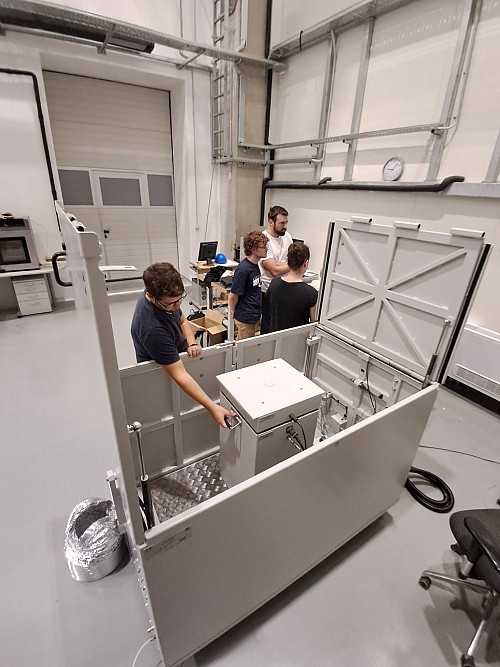
The Acceleratory Rate Calorimetry (ARC EVx) from Thermal Hazard Technology. It was acquired the ARC in consortium with the L18 Laboratory for Modern Battery Systems from National Institute of Chemistry. The ARC EVx brings new opportunities to carry out our research on the safety and performance of battery cells. We can now perform thermal degradation studies under various conditions to determine the onset of thermal runaway and the energy released during the phenomenon. It also allows us to conduct abuse testing, performance testing and gas collection.
%%SLIKA_1%%
FireSafePV materials
Budget: 11K € (5K €)
Financing: SFPE Student Research Grant
Partners: ZAG
Contact person: Nik Rus
This initiative will increase the already rising rate of new PV installations. However, putting a PV system on the roof has been shown to increase the extent of damage in case of a re,2 both because it can be the source of a re (including the DC and AC parts of the installation) and because the consequences of a roof re increase. Current estimates show that the annual expected number of res related to PV systems is 29 res/GW of the installed power.3 Many causes (in cases where the PV systems were the source of re) were related to the processes of installation and maintenance of the PV installation.
Assessing and improving the fire performance of building envelope systems.
Project Code: L2-50046
Budget: 400K € (300K €)
Financing: ARRS (national funding)
Project Coordinator: Prof Grunde JOMAAS
Contact person: Prof Grunde JOMAAS
Partners: Rockwool, ZAG
Duration: 3 years (1 Oct 2023 - 30 Sep 2026)
The most common type of façades used in new construction and renovation projects are ETICS (External Thermal Insulation Composite System, 65%), cavity walls (19%) and ventilated facades (12%). ETICS systems are also the predominant type of façades installed in Slovenia for renovation of existing buildings and for new constructions. Considering the significant market of ETICS systems throughout Europe, along with the fire risk associated with façade systems, it is of great priority for the society and research community to increase the understanding of the fire behaviour of ETICS. The project will carry out an extensive experimental study that combines large-scale and mid-scale experiments to identify the sensitivity to failure of ETICS systems in a fire scenario.
%%SLIKA_6%%
Innovative engineered wood products made from thermo-hydro-mechanical densified wood with enhanced physical, mechanical and fire performance (WoDeFi)
Project Code: J4-50132
Budget: 300K €
Financing: ARIS
Project Coordinator: InnoRenew CoE (Slovenia)
Contact person: Dr. Ulises ROJAS-ALVA
Partners: ZAG, InnoRenew CoE
Duration: 3 years (1 Oct 2023 - 30 Sep 2026)
The project will be focused on developing a Thermo-hydro-mechanical (THM) densification process in combination with other suitable wood modification treatments in order to add value to low quality wood species that traditionally weren’t use in construction. Then the optimized wood modification procedure will be applied into engineered timber products (EWPs) with construction element size to verify its improvement of mechanical properties and performance under fire.
%%SLIKA_3%%
Automatic IR radiant panels (ARRS)
Contact person: Dr Andrea Lucherini
Duration: 2 years (1 Oct 2022- 30 Sep 2024)
Within this research project, a bench-scale experimental apparatus for fire testing using high-performance radiant panels is designed and assembled following the state-of-the-art. The system can be combined with other experimental equipment to examine many aspects related to the thermal and mechanical behaviour of novel sustainable construction materials and systems exposed to fire.
Energy Independent and Efficient Deployable Military Camps (INDY):
Project Code: 101103388
Budget: 14.4M € (€110K €)
Financing: European Defence Fund (EDF), 2021-ENERENV-D
Project Coordinator: Friderik Knez
Contact person: Dr. Ulises ROJAS-ALVA
Partners: TECES (ZAG is a subcontractor), AVL List GmbH, CAFA TECH OU, CNV Consulting, Commissariat à l’Energie Atomique et aux Energies Alternatives, Equipos Móviles de Campaña ARPA SAU, Fraunhofer-Gesellschaft, Indra
Duration: 2 years (1 Dec 2022 - 30 Nov 2024)
With the selected proposals, the EDF will support high-end defence capability projects such as the next generation of aircraft fighters, tanks and ships, as well as critical defence technologies such as military cloud, AI, semiconductors, space, cyber or medical counter- measures. It will also spearhead disruptive technologies, notably in quantum technologies and new materials and tap into promising SMEs and start-ups.
%%SLIKA_4%%
Exploration Fire Safety (ExFires)
Project Code: 4000139129/22/NL/PA/pt
Budget: 20K € (20K €)
Financing: ESA- EUROPEAN SPACE AGENCY
Project Coordinator: Prof Grunde JOMAAS
Contact person: Dr Ulises ROJAS-ALVA
Partners: ZARM (Centre of Applied Space Technology and Microgravity), University College London, UPMC (Universite Pierre et Marie Curie), JRC (Joint Research Centre)
Duration: 3 years (1 Sep 2022 - 1 Sep 2025)
Abstract: The Topical Team “Exploration Fire Safety (ExFireS)” aims to enhance fire safety in space vehicles and infrastructure. The focus of the team is on the development of material flammability experiments in microgravity that will serve as validation experiments for results from other microgravity facilities and for model development.
Mechanical resistance of intumescent coatings (COWIFonden)
Budget: 46,836.25 € (12,043.61 €)
Project coordinator: Technical University of Denmark (DTU)
Contact person at ZAG: Andrea Lucherini
Partners: Technical University of Denmark (Denmark)
Duration: February 2022 – June 2023
This project investigates the mechanical vulnerability of intumescent coatings used for fire protection of steel structures, particularly bridge cables and profiles. Through ambient mechanical tests and coupled thermo-mechanical experiments, it aims to quantify how steel deformation, profile geometry, coating type, and coating thickness influence cracking, detachment, or fall-off of the insulation. The results will help define admissible deformation limits that designers can use to select suitable coating systems and improve fire safety.
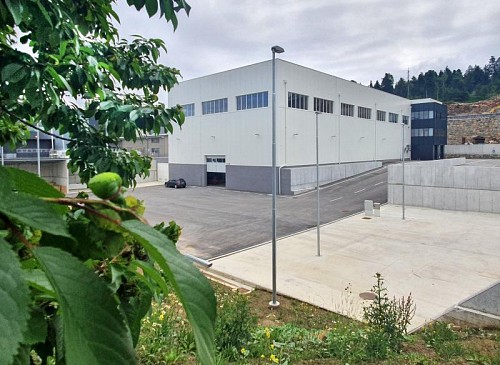
The focus of the new fire research laboratory building in Logatec is to offer state-of-the-art fire research with high-fidelity measurements through ZAG’s new department for Fire-Safe Sustainable Built Environment (FRISSBE). The building is equipped with experimental facilities for reaction to fire and fire resistance research. In addition, it offers a unique façade research set-up with measurements of combustion products and heat release rate. Furthermore, the building can offer bespoke experimental designs with oxygen calorimetry and FTIR measurements in rooms and under hoods. Although the building is new, the two teams that runs it are both very experienced in terms of standard testing and fire science research.
Areas of work in the fire laboratory:
- Structure testing (EN 13501-2, -3, -4, -5)
- Materials testing (EN 13501-1)
- SBI
- Bomb calorimeter
- Non-combustibility
- Small flame
- Flooring
- Glowing combustion
- Maritime testing (FTP Code)
- Industrial research testing on cone / modified cone
- Fire safety studies
- ETA / STS development, certification support
Key equipment in the fire laboratory:
- Furnaces (vertical and combined)
- Façade testing capabilities
- SBI
- Room Corner test
- Cone calorimeter
- RfF testing
- Large Hood (oxygen consumption calorimetry) – around 10 MW capacity
- Oxygen concentration measuring equipment (3 channels continuous,12 channels discrete)
- FTIR
- GC/MS
- HPLC
- Multichannel DAQs (total 360 temp. channels), heat flux, air movement, etc
- Battery Testing with Accelerating Rate Calorimetry (ARC) Test

Ground-based facility: Fire Safety for Space Exploration
Evaluating the thermal stability and safety of battery technology
The safety and performance of battery technology for space exploration are highly relevant as they are used for several applications (mobility devices, energy storage, crewed-space vehicles, small gadgets, satellites, etc.). Primary (non-rechargeable) and secondary (rechargeable) battery technologies would operate under extreme operational conditions, such as vacuum, vibration during launch and orbit, a wide temperature range, ionising radiation, and so on. According to NASA, the technological specifications of energy storage technologies for future planetary science missions must have high specific energy (≥250 Wh/kg) and long lifespan (15 years, 50,000 cycles) for rechargeable batteries, and more than 500 Wh/kg for primary batteries. Lastly, both primary and secondary batteries must operate under extreme conditions (-40 °C to 460 °C). Lithium-ion batteries are widely used in spacecraft applications; however, LIB technology still requires substantial improvement, as significant challenges remain in component degradation, thermal stability, and safety. Hence, studying and testing the thermal stability and safety of LIB and other battery technologies is indeed of high importance for future space missions.
The fire laboratory at ZAG-FRISSBE offers the opportunity to conduct thermal stability and safety studies on battery cells of various technologies for spacecraft applications.
Equipment available:
- ARC (Acceleratory Rate Calorimeter) for thermal degradation studies (determining the onset of thermal runaway), see Figure 1
- FTIR (Fourier Transform Infrared Spectroscopy) for characterising and quantifying the off-gassing in the far-field.
- GC-MS (Gas Chromatography – Mass spectrometry) for characterising off-gassing.
- Oxygen calorimeter for quantifying exothermic reactions (fire).
- Other ad-hoc probes and equipment, such as thermocouples, cameras, data loggers and others, see Figure 2.
%%GALLERY-%%SLIKA_1%% %%SLIKA_2%%
Figure 1: The Acceleratory Rate Calorimeter (ARC) assembly (left), and the standard and EVx combustion chambers (right). The assembly comprises combustion chambers that enable testing of cell components, from small cells (coin) to large battery cells (up to 100Ah). Both chambers sit in the blast box (left), where the experiments take place. The electronic cabinet (left) has the PC workstation, the ESU/OSU (for control and data acquisition from the calorimeter and add-ons), the PSU/PSU+ (provides power to the ARC system), and the CPU (for specific heat capacity measurements).
%%SLIKA_7%%
Figure 2: Schematic of an experimental setup with the leading equipment utilised during the overcharging abuse test of the selected LIB cells in the battery pack. The first test was for the lower-left cell, the second for the upper-right cell, and the third for the middle cell.
Type of tests and activities we can offer:
- Energy release and gas characterisation of various batteries, from cell-size to pack level, fires up to 10 MW.
- Flame characterisation of various types of geometry cells up to 100 Ah, see Figure 3 and Figure 4.
- Specific heat capacity tests, up to 350 °C, for small to large cells up to 100 Ah.
- Thermal degradation studies: from cell components to full-cell size of various geometries (up to 100 Ah).:
- Heat-seek-wait method, see Figure 5.
- Heating conditions: Adiabatic, ramping, isothermal, isoperibolic and step-isothermal.
- Sensitivity 0.005-0.02 °C/min
- Temperature and voltage measurements during safety testing, see Figure 6.
- Extinguishment tests.
- Training of students, space engineers and astronauts.
- Other types of tests will be added in the future (abuse testing and standard testing): Cupper-slug calorimetry, Fractional thermal runaway calorimeter, Sensible enthalpy rise calorimeter, Thermal conductivity, Nail penetration and crash test, and Overcharge test.
%%GALLERY-%%SLIKA_4%% %%SLIKA_5%%
Figure 3: Fire experiments of battery packs in the ZAG fire laboratory in Logatec, Slovenia. The experiments show extensive jet flames, a clear hazard of LIB technology.
%%SLIKA_6%%
Figure 4: Flames appearing after thermal runaway during the test with a battery pack. The duration of the flaming was very short, corresponding to the combustion of the gas released during the forced thermal runaway. The flames were confined to the gas phase and did not ignite any materials in the battery pack or the test setup.
%%SLIKA_3%%
Figure 5: Heat-seek-wait (HSW) test conducted in the ARC on LIB coin cells. In the HSW test, the cell is heated up in steps in semi-adiabatic conditions. That is, for each heat-up step, the ARC waits an additional step until self-reactions occur in the LIB cell, thereby identifying the onset of thermal runaway and other characteristic properties (e.g., delay time).
The facility is open for research proposals:
For any interested parties using the facilities, administrative and logistical coordination is handled by ZAG, which provides the specifications for all equipment available to investigators interested in utilising the facility. The respective research teams implement and conduct the experiments. The ZAG Technicians, who have been trained on the various apparatus, will introduce them and support the implementation of the experimental campaign.
Any proposed research projects can be funded by ESA, taking into account the operating costs of the laboratory facility. The ESA Continuously Open Research Announcements (CORA) programme offers funding for researchers from ESA member states or through the OSIP Platform. Note that ESA can fund up to € 50,000 per proposal, which includes the utilisation costs of the testing equipment and laboratory (excluding consumables and travel expenses). Before submitting any application to ESA, please don't hesitate to contact us for further details and information on the scope of the desired experiment or other activities.
ESA CORA Programme:
References:
- Rojas-Alva, U., Mancini, L., Pranjić, A.M., Marini, E., Bozzini, B.. On thermal safety characteristics of rechargeable alkaline batteries based on zinc and manganese dioxide. Process Safety and Environmental Protection. 2025 May 11:107175.
- Song L, Zhou Z, Ju X, Wang B, Rojas-Alva U, Zhou X, Yang L. Experimental study on thermal runaway characteristics and fire hazards of lithium-ion batteries in semi-confined space of transportation. Journal of Energy Storage. 2025 Aug 30;128:117220.
- Rojas Alva, W. U., Uršič, M., & Jomaas, G. (2023). Fire safety of li-ion battery packs for aviation. SFPE Europe, 2(30, [ 5]), 27–33.
Images and results about the the equipment and selected experiments.
%%SLIKA_8%%
Figure 6: Temperature and voltage results for a test with a battery pack where the goal was to determine the safety design of the battery enclosure.
Contact:
Dr Ulises Rojas-Alva
E-mail: ulises.rojas-alva@zag.si
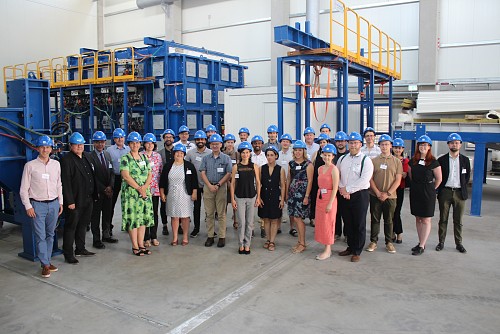
Say hello to us
In the lists below, the FRISSBE team collects all sent press releses and some significant media appearances. Press releases are available in PDF files in Slovenian language. Most of the media reports, apart from statements of international experts, are also in Slovenian language.
PRESS RELEASES
2023
- Fire takes no vacation #2: When history burns, March, 25, Ig, Slovenia (before the event)
- Fire takes no vacation #3 – Engineering methods for fire safety design, August 3, Logatec, Slovenia (before the event)
- About fires of photovoltaic (PV) systemss (in the light of a recent fire near Ljubljana)
- First SFPE symposium in Slovenia: Fire safety and sustainability (before the event)
- First SFPE symposium in Slovenia: Fire safety and sustainability (before the event)
2022
- The opening of the Fire laboratory, September 2, Logatec, Slovenia (after the event)
- The opening of the Fire laboratory, September 2, Logatec, Slovenia (before the event)
- Fire takes no vacation, August 11, Ig, Slovenia (before the event)
- Workshop - FIRE SAFETY & SUSTAINABILITY at a crossroads: How do we find a joint way forward?, June 23-24, Logatec, Slovenia (after the event)
- Workshop - FIRE SAFETY & SUSTAINABILITY at a crossroads: How do we find a joint way forward?, June 23-24, Logatec, Slovenia (before the event)
MEDIA APPEARANCES
TELEVISION
- PLANET TV, show PLANET18, August, 11, 2022
- POP TV, show 24UR ZVEČER, September 2, 2022
- RTV SLOVENIJA, show ZNANOST IN TEHNOLOGIJA, September 1, 2022
- NOVA24 TV, August 3, 2023
- POP TV, show INŠPEKTOR24, August 26, 2023
RADIO
- RTV SLOVENIJA, radio VAL 202, August 17, 2022
- PRIMORSKI VAL, September 15, 2022
Logo for download
%%GALLERY-%%SLIKA_1%% %%SLIKA_2%%
Corporate identity manual for download
FRISSBE ERA Chair team will presumably consist of the ERA Chair holder, 3 or more senior researchers, up to 4 postdoctoral researchers and 3 PhD students. If you are keen to join the team we are kindly inviting you to follow our open employment offers.

